

Helpful videos to guide your NF1-PN journey with GOMEKLI
Actor portrayal.
Talking to your doctor about GOMEKLI
Learn some tips on how to start a conversation with your doctor about GOMEKLI.
Petal shape from GOMEKLI logo appears onscreen, spinning as if the video is loading. Petal shape comes to a stop as full GOMEKLI logo fades in.
Image onscreen:
GOMEKLI logo shrinks and moves to top center of the frame. Indication statement appears.
Text onscreen and voice-over:
GOMEKLI (mirdametinib) is a prescription medicine used to treat adults and children 2 years of age and older with neurofibromatosis type 1 (NF1) who have plexiform neurofibromas (PN) that cause symptoms and cannot be completely removed by surgery.
It is not known if GOMEKLI is safe and effective in children under 2 years of age.
Please see Important Safety Information later in this video and Patient Information available on GOMEKLI.com.
Image onscreen:
Screen fades to white and the video title appears. Flag with the logo in the top right corner of the frame appears, where it remains for the entirety of the video.
Text onscreen:
Talking to your doctor about GOMEKLI
Voice-over:
It can be hard to start a conversation about treatment or know what questions to ask. In this video, we’ll share some tips for having a productive conversation with your doctor.
Image onscreen:
A split screen of 2 individuals with NF1-PN is shown: On the left-hand side of the screen, a woman looks at herself in the bathroom mirror, and on the right side of the screen, a young boy gets help with his backpack from his mother.
Voice-over:
If you’re living with or caring for someone who has NF1-PN, you know firsthand the impact plexiform neurofibromas can have.
Image onscreen:
The woman sits at a desk with her computer open to the GOMEKLI website. She has a pen and paper in hand and is getting ready to write down information.
Voice-over:
When you need to talk about it with your doctor, it helps to be prepared with questions or concerns.
Image onscreen:
The image zooms in on the treatment goals the adult woman has written for herself.
Voice-over:
First, think about your goals. What are the treatment goals you’d like to set with your doctor for yourself or the person you care for? What else is important to you?
Image onscreen:
The woman smiles as she reviews the treatment goals she wrote on her notepad.
Voice-over:
Knowing what you’re looking for can help you and your doctor come up with a treatment plan that works for you. If you’re not sure, you can ask your doctor what they think some goals could be and you can discuss them together.
Image onscreen:
As the symptom types are introduced, the screen splits into 3 sections. The left panel shows a young boy grimacing as he accidentally bumps a PN on his elbow against a door. In the middle panel is an adult woman changing how she walks due to pain from her PN, and the panel on the right shows an adult male looking in the mirror at a PN, located on his neck, that has grown larger.
Text onscreen:
Tell your doctor about all of your medical conditions before starting GOMEKLI.
Voice-over:
Next, think about any new or worsening symptoms you’d like to discuss. Are you or the person you care for experiencing pain, difficulty moving around, or visible changes to your plexiforms? Are there other symptoms you want to mention?
Image onscreen:
A woman is sitting at a desk. Her computer displays the GOMEKLI website’s Resources page, and she is in the process of downloading the Doctor Discussion Guide.
Voice-over:
The GOMEKLI Doctor Discussion Guide is a resource you can use to start a conversation that will help you find out if GOMEKLI is right for you. It’s available on GOMEKLI.com and you can download it, fill it out, and save it for your appointment.
Image onscreen:
An adult woman sits at her computer, reviewing the downloaded NF1 symptom-tracker form.
Voice-over:
It has a place to capture what symptoms you or the person you care for is experiencing, and to rate how much those symptoms are impacting daily life.
Image onscreen:
The woman is now scrolling through the guide. She is reading through the frequently asked questions portion of the document.
Voice-over:
Finally, think about questions you’d like to ask your doctor about GOMEKLI treatment. The discussion guide has a list of commonly asked questions, like: How can GOMEKLI help? How is this medicine taken? When can I expect to see results? What are the most common side effects of GOMEKLI?
Image onscreen:
The woman is scrolling to the bottom of the document where there is a blank space provided for patients who need or want to ask personalized questions about their experiences with NF1.
Voice-over:
There’s also space where you can write down any other questions you may have so you’re prepared for the conversation.
Image onscreen:
We see the woman from a side angle, looking at her computer screen.
Voice-over:
Remember, this is a chance for you to learn about a treatment that may help you or someone you care about. The more information you have, the better equipped you’ll be to take part in treatment decisions.
Image onscreen:
The woman sits across from her doctor as they engage in conversation.
Voice-over:
Taking an active role in the discussion and standing up for what you want can help you get the care you need.
Image onscreen:
The conversation between the woman and her doctor continues. The patient is happily nodding, and in the end looks toward the camera and smiles.
Voice-over:
We hope your next doctor’s visit is a productive one. Feel free to rewatch this video at any time and explore additional resources at GOMEKLI.com.
Text onscreen and voice-over:
Important Safety Information
Before taking GOMEKLI, tell your healthcare provider about all of your medical conditions, including if you:
- Have eye problems
- Have heart problems
-
Are pregnant or plan to become pregnant. GOMEKLI can harm your unborn
baby
Females who are able to become pregnant:- Your healthcare provider should check to see if you are pregnant before you begin treatment with GOMEKLI.
- Use effective birth control (contraception) during treatment with GOMEKLI and for 6 weeks after your last dose.
- Tell your healthcare provider right away if you become pregnant or think you may be pregnant during treatment with GOMEKLI.
- Use effective birth control (contraception) during treatment with GOMEKLI and for 3 months after your last dose.
- Tell your healthcare provider right away if your female partner becomes pregnant or thinks she may be pregnant during treatment with GOMEKLI.
-
Are breastfeeding or plan to breastfeed. It is not known if GOMEKLI passes
into your breastmilk.
- Do not breastfeed during treatment with GOMEKLI and for 1 week after your last dose.
- Talk to your healthcare provider about the best way to feed your baby during this time.
How should I take GOMEKLI?
- Take GOMEKLI exactly as your healthcare provider tells you to take it. Your healthcare provider may change your dose, temporarily stop, or permanently stop treatment with GOMEKLI if you develop certain side effects.
- Take GOMEKLI twice a day, about 12 hours apart, for 21 days, followed by 7 days off treatment, to complete a 28-day treatment cycle. Your healthcare provider will decide how many treatment cycles are right for you.
- Take GOMEKLI with or without food.
- GOMEKLI comes in two different dosage forms, GOMEKLI capsules and GOMEKLI tablets for oral suspension. Your healthcare provider will decide the dosage form and dose of GOMEKLI that is right for you.
- If you take GOMEKLI capsules: Swallow each capsule whole with drinking water. If more than 1 capsule is required, swallow 1 capsule at a time. Do not open, break or chew the capsules.
-
If you take GOMEKLI tablets for oral suspension, either:
- Swallow each tablet for oral suspension whole with drinking water. If more than 1 tablet is required, swallow 1 tablet at a time. OR
- Disperse the tablets for oral suspension in drinking water to make a liquid (suspension) before you take or give GOMEKLI.
- If you miss a dose of GOMEKLI, skip the missed dose and take your next dose at your regularly scheduled time.
- If you vomit at any time after taking GOMEKLI, do not take an additional dose. Take your next dose at your regularly scheduled time.
What are the possible side effects of GOMEKLI?
GOMEKLI may cause serious side effects, including:
-
Eye problems. GOMEKLI may cause eye problems that can lead to blindness.
Your healthcare provider will check your vision before and during treatment
with GOMEKLI. Tell your healthcare provider right away if you get any of the
following signs or symptoms of eye problems:
- Blurred vision
- Loss of vision
- Other changes to your vision
-
Heart problems. GOMEKLI may lower the amount of blood pumped by your heart,
which is common in children during treatment with GOMEKLI and can also be
severe. Your healthcare provider will do tests before you start GOMEKLI
treatment, every 3 months during your first year of treatment, and then as
needed to make sure your heart is working properly. Tell your healthcare
provider right away if you get any of the following signs or symptoms of
heart problems:
- Coughing or wheezing
- Shortness of breath
- Swelling of your ankles and feet
- Tiredness
- Increased heart rate
-
Skin problems. Skin rashes are common with GOMEKLI in both adults and
children and can also be severe. GOMEKLI can also cause hair loss
(alopecia). Tell your healthcare provider if you develop any of the
following signs or symptoms of skin problems:
- Flat skin rash
- Raised bumps on the skin
- Skin bumps that look like acne
- Skin redness
- Itchy rash
- Peeling skin
- Diarrhea
- Nausea
- Muscle, joint, and bone pain
- Vomiting
- Tiredness
The most common side effects of GOMEKLI in adults include:
The most common side effects of GOMEKLI in children include:
- Diarrhea
- Muscle, joint, and bone pain
- Stomach (abdominal) pain
- Vomiting
- Headache
- Skin redness, swelling, or pain around the fingernails or toenails
- Nausea
GOMEKLI may cause fertility problems in females, which may affect your ability to have children. Talk to your healthcare provider if you have concerns about fertility.
These are not all of the possible side effects of GOMEKLI. Call your doctor for medical advice about side effects. You may report side effects to FDA at 1-800-FDA-1088.
Please see full Prescribing Information, including Patient Information and Instructions for Use, available on GOMEKLI.com.
Text onscreen:
Thank you!
©2025 SpringWorks Therapeutics, Inc. All rights reserved. GOMEKLI is a registered trademark of SpringWorks Therapeutics, Inc. C_GOM_US_0434 8/25
Voice-over:
Thank you for watching, and remember: You’ve got this!
Tests you may need as you get going
Learn more about the tests you may need before and throughout GOMEKLI treatment.
Petal shape from GOMEKLI logo appears onscreen, spinning as if the video is loading. Petal shape comes to a stop as full GOMEKLI logo fades in.
Image onscreen:
GOMEKLI logo shrinks and moves to top center of the frame. Indication statement appears.
Text onscreen and voice-over:
GOMEKLI (mirdametinib) is a prescription medicine used to treat adults and children 2 years of age and older with neurofibromatosis type 1 (NF1) who have plexiform neurofibromas (PN) that cause symptoms and cannot be completely removed by surgery.
It is not known if GOMEKLI is safe and effective in children under 2 years of age.
Please see Important Safety Information later in this video and Patient Information available on GOMEKLI.com.
Text onscreen:
Tests you may need as you get going
Voice-over:
Today we’re going to discuss some steps you may need to take before starting treatment with GOMEKLI. It’s important to know that after your healthcare provider decides GOMEKLI may be a good fit for you, it may take some time before you can get started on treatment. First, you may need to take some tests.
Image onscreen:
A woman talking with her doctor about tests she may need.
Text onscreen:
Echocardiogram Eye exam Blood tests Pregnancy test
Voice-over:
Some people taking GOMEKLI experienced serious side effects including heart and eye problems. To make sure you’re a good candidate for GOMEKLI treatment, your healthcare provider will order an echocardiogram to take a look at your heart…
Image onscreen:
A man in an exam room getting an EKG.
Voice-over:
…as well as an eye exam to check your vision and the overall health of your eyes. To make sure you get the proper tests, inform your eye doctor that you have NF1-PN and are planning to start GOMEKLI, a MEK inhibitor. You should also let your doctor know about all of your medical conditions, including if you have a history of eye problems, heart problems, are pregnant or plan to become pregnant, or are breastfeeding or plan to breastfeed.
Image onscreen:
Woman stands with words popping up around her.
Voice-over:
You’ll also take blood tests to check your levels before you start GOMEKLI. Your healthcare provider will want you to do these tests regularly throughout your treatment too, so they can check for any changes.
Image onscreen:
A doctor’s lab that has a microscope and vial holders.
Voice-over:
GOMEKLI may cause fertility problems in females, which may affect your ability to have children. If you’re able to become pregnant, your healthcare provider should give you a pregnancy test before you begin treatment, as GOMEKLI can harm your unborn baby. Talk to your healthcare provider if you have concerns about fertility. If you’re able to become pregnant, your healthcare provider should give you a pregnancy test before you begin treatment, as GOMEKLI can harm your unborn baby. Talk to your healthcare provider if you have concerns about fertility.
Image onscreen:
A doctor giving a patient a blood test.
Text onscreen:
You should use effective birth control (contraception) during treatment with GOMEKLI and for 6 weeks after your last dose. Tell your healthcare provider right away if you become pregnant or think you may be pregnant during treatment with GOMEKLI.
Voice-over:
Remember, these tests may take some time to schedule and complete, but there are things you can do in the meantime to prepare for treatment. GOMEKLI.com has resources available that can help.
Image onscreen:
A man sitting at his desk looking at GOMEKLI.com.
Voice-over:
Additionally, once you’ve been prescribed GOMEKLI, you can enroll in SpringWorks CareConnections, a free, personalized patient support program. SpringWorks CareConnections can help you with insurance navigation and provide educational and emotional support throughout treatment. It may be helpful to sign up for the program as soon as your healthcare provider prescribes GOMEKLI. SpringWorks CareConnections may also help with eligible out-of-pocket costs for certain treatment-related tests, examinations, and/or specialty visits during treatment with GOMEKLI.
Text onscreen:
Terms and conditions apply. Reimbursement for eligible treatment-related costs are subject to annual benefit maximums. To receive the reimbursement of eligible treatment-related expenses, an Explanation of Benefits (EOB) form must be submitted, along with copies of receipts for any payments made in full, or your healthcare provider may submit an invoice for services rendered. Full terms and conditions are provided during the enrollment process and are available upon request by contacting SpringWorks CareConnections® at 844-CARES-55 (844-227-3755).
Image onscreen:
The man on his phone sitting down.
Text onscreen:
Call SpringWorks CareConnections® at 844-CARES-55 (844-227-3755), Monday – Friday,
8AM–10PM ET.
Voice-over:
To see how SpringWorks CareConnections can help you, call 844-227-3755 Monday through Friday, between 8 AM and 10 PM Eastern Time.
Text onscreen and voice-over:
Important Safety Information
Before taking GOMEKLI, tell your healthcare provider about all of your medical conditions, including if you:
- Have eye problems
- Have heart problems
-
Are pregnant or plan to become pregnant. GOMEKLI can harm your unborn baby
Females who are able to become pregnant:- Your healthcare provider should check to see if you are pregnant before you begin treatment with GOMEKLI.
- Use effective birth control (contraception) during treatment with GOMEKLI and for 6 weeks after your last dose.
- Tell your healthcare provider right away if you become pregnant or think you may be pregnant during treatment with GOMEKLI.
- Use effective birth control (contraception) during treatment with GOMEKLI and for 3 months after your last dose.
- Tell your healthcare provider right away if your female partner becomes pregnant or thinks she may be pregnant during treatment with GOMEKLI.
-
Are breastfeeding or plan to breastfeed. It is not known if GOMEKLI passes into your breastmilk.
- Do not breastfeed during treatment with GOMEKLI and for 1 week after your last dose.
- Talk to your healthcare provider about the best way to feed your baby during this time.
How should I take GOMEKLI?
- Take GOMEKLI exactly as your healthcare provider tells you to take it. Your healthcare provider may change your dose, temporarily stop, or permanently stop treatment with GOMEKLI if you develop certain side effects.
- Take GOMEKLI twice a day, about 12 hours apart, for 21 days, followed by 7 days off treatment, to complete a 28-day treatment cycle. Your healthcare provider will decide how many treatment cycles are right for you.
- Take GOMEKLI with or without food.
- GOMEKLI comes in two different dosage forms, GOMEKLI capsules and GOMEKLI tablets for oral suspension. Your healthcare provider will decide the dosage form and dose of GOMEKLI that is right for you.
- If you take GOMEKLI capsules: Swallow each capsule whole with drinking water. If more than 1 capsule is required, swallow 1 capsule at a time. Do not open, break or chew the capsules.
-
If you take GOMEKLI tablets for oral suspension, either:
- Swallow each tablet for oral suspension whole with drinking water. If more than 1 tablet is required, swallow 1 tablet at a time. OR
- Disperse the tablets for oral suspension in drinking water to make a liquid (suspension) before you take or give GOMEKLI.
See the “Instructions for Use” that come with your medicine for instructions on how to prepare and take GOMEKLI tablets for oral suspension.
- If you miss a dose of GOMEKLI, skip the missed dose and take your next dose at your regularly scheduled time.
- If you vomit at any time after taking GOMEKLI, do not take an additional dose. Take your next dose at your regularly scheduled time.
What are the possible side effects of GOMEKLI?
GOMEKLI may cause serious side effects, including:
-
Eye problems. GOMEKLI may cause eye problems that can lead to blindness. Your healthcare provider will check your vision before and during treatment with GOMEKLI. Tell your healthcare provider right away if you get any of the following signs or symptoms of eye problems:
- Blurred vision
- Loss of vision
- Other changes to your vision
-
Heart problems. GOMEKLI may lower the amount of blood pumped by your heart, which is common in children during treatment with GOMEKLI and can also be severe. Your healthcare provider will do tests before you start GOMEKLI treatment, every 3 months during your first year of treatment, and then as needed to make sure your heart is working properly. Tell your healthcare provider right away if you get any of the following signs or symptoms of heart problems:
- Coughing or wheezing
- Shortness of breath
- Swelling of your ankles and feet
- Tiredness
- Increased heart rate
-
Skin problems. Skin rashes are common with GOMEKLI in both adults and children and can also be severe. GOMEKLI can also cause hair loss (alopecia). Tell your healthcare provider if you develop any of the following signs or symptoms of skin problems:
- Flat skin rash
- Raised bumps on the skin
- Skin bumps that look like acne
- Skin redness
- Itchy rash
- Peeling skin
The most common side effects of GOMEKLI in adults include:
- Diarrhea
- Nausea
- Muscle, joint, and bone pain
- Vomiting
- Tiredness
The most common side effects of GOMEKLI in children include:
- Diarrhea
- Muscle, joint, and bone pain
- Stomach (abdominal) pain
- Vomiting
- Headache
- Skin redness, swelling, or pain around the fingernails or toenails
- Nausea
GOMEKLI may cause fertility problems in females, which may affect your ability to have children. Talk to your healthcare provider if you have concerns about fertility.
These are not all of the possible side effects of GOMEKLI. Call your doctor for medical advice about side effects. You may report side effects to FDA at 1-800-FDA-1088.
Please see full Prescribing Information, including Patient Information and Instructions for Use, available on GOMEKLI.com.
Text onscreen:
©2025 SpringWorks Therapeutics, Inc. All rights reserved. GOMEKLI and SpringWorks CareConnections are registered trademarks of SpringWorks Therapeutics, Inc. C_GOM_US_0392 11/25
Voice-over:
Thank you for watching. And remember: You’ve got this!
Support with SpringWorks CareConnections®
See all the different ways SpringWorks CareConnections can provide support throughout GOMEKLI treatment.
Petal shape from GOMEKLI logo appears onscreen, spinning as if the video is loading. Petal shape comes to a stop as full GOMEKLI logo fades in.
Image onscreen:
GOMEKLI logo shrinks and moves to top center of the frame. Indication statement appears.
Text onscreen and voice-over:
GOMEKLI (mirdametinib) is a prescription medicine used to treat adults and children 2 years of age and older with neurofibromatosis type 1 (NF1) who have plexiform neurofibromas (PN) that cause symptoms and cannot be completely removed by surgery.
It is not known if GOMEKLI is safe and effective in children under 2 years of age.
Please see Important Safety Information later in this video and Patient Information available on GOMEKLI.com.
Image onscreen:
Screen fades and the video title appears.
Text onscreen:
Support with SpringWorks CareConnections®
Voice-over:
Just getting started on GOMEKLI? In this video, we’ll explain how SpringWorks CareConnections can provide support throughout your treatment.
Image onscreen:
The SpringWorks CareConnections logo.
Voice-over:
SpringWorks CareConnections is a free, personalized patient support program for people taking GOMEKLI. The program is available throughout your treatment journey to help you navigate your insurance coverage, answer questions about your treatment, and help you start and stay on track with GOMEKLI.
Image onscreen:
A woman sitting at her computer while talking with a SpringWorks CareConnections Nurse Advocate.
Voice-over:
Enrollment only takes a few steps, and once you’re signed up one of our Nurse Advocates will give you a call to welcome you to the program. Your Nurse Advocate will be your single point of contact at SpringWorks CareConnections, and can provide you with personalized educational and emotional support. Some of the ways our Nurse Advocates can support you include helping you understand treatment with GOMEKLI, assisting you or your loved one with staying on track and taking the medication, and coordinating with your doctor’s office and pharmacy to make sure you receive GOMEKLI as prescribed. The SpringWorks CareConnections Patient Support Program is not intended to take the place of your healthcare provider, and our team of Nurse Advocates cannot provide medical or clinical advice.
Image onscreen:
A woman in her home thinking about the cost of treatment.
Text onscreen:
Terms and conditions apply. Copay program for GOMEKLI and reimbursement for eligible treatment-related costs are subject to annual benefit maximums. To receive reimbursement of eligible treatment-related expenses, an Explanation of Benefits (EOB) form must be submitted, along with copies of receipts for any payments made in full, or your healthcare provider may submit an invoice for services rendered. Full terms and conditions are provided during the enrollment process and are available upon request by contacting SpringWorks CareConnections® at 844-CARES-55 (844-227-3755).
Voice-over:
At SpringWorks, we don’t want concerns about cost or insurance coverage to come between you and your medication. The GOMEKLI Commercial Copay Program may be able to help you save. If you have commercial health insurance, our program could help you pay as little as a $0 copay per 21-day supply of GOMEKLI.
Image onscreen:
The woman pulling her SpringWorks CareConnections copay card from her wallet.
Voice-over:
It may also help with eligible out-of-pocket costs for certain treatment-related tests, exams, or specialty visits during treatment with GOMEKLI.
Image onscreen:
The Nurse Advocate and woman talking to each other.
Text onscreen:
Terms and conditions apply. PAP eligibility criteria and annual household income limits apply. Full terms and conditions are provided during the enrollment process and are available upon request by contacting SpringWorks CareConnections® at 844-CARES-55 (844–227–3755).
Voice-over:
And if you’re uninsured, lack coverage for GOMEKLI, or are experiencing financial hardship, ask your Nurse Advocate about the Patient Assistance Program, which may help you obtain GOMEKLI at no cost.
Image onscreen:
A woman enrolling in SpringWorks CareConnections.
Text onscreen:
Enroll in SpringWorks CareConnections® now!
Voice-over:
If you’re ready to start taking advantage of the support offered by SpringWorks CareConnections, you can enroll now by heading to the Savings & Support page of the GOMEKLI website and selecting the “Enroll now” button.
Text onscreen:
The SpringWorks CareConnections® Patient Support Program is not intended to take the place of your healthcare provider, and our team of Nurse Advocates cannot provide medical or clinical advice.
Voice-over:
At SpringWorks, we want to make sure that everybody taking GOMEKLI has access to support. We can’t wait to meet you and help you stay on track with your GOMEKLI treatment.
Text onscreen and voice-over:
Important Safety Information
Before taking GOMEKLI, tell your healthcare provider about all of your medical conditions, including if you:
- Have eye problems
- Have heart problems
-
Are pregnant or plan to become pregnant. GOMEKLI can harm your unborn baby
Females who are able to become pregnant:- Your healthcare provider should check to see if you are pregnant before you begin treatment with GOMEKLI.
- Use effective birth control (contraception) during treatment with GOMEKLI and for 6 weeks after your last dose.
- Tell your healthcare provider right away if you become pregnant or think you may be pregnant during treatment with GOMEKLI.
- Use effective birth control (contraception) during treatment with GOMEKLI and for 3 months after your last dose.
- Tell your healthcare provider right away if your female partner becomes pregnant or thinks she may be pregnant during treatment with GOMEKLI.
-
Are breastfeeding or plan to breastfeed. It is not known if GOMEKLI passes into your breastmilk.
- Do not breastfeed during treatment with GOMEKLI and for 1 week after your last dose.
- Talk to your healthcare provider about the best way to feed your baby during this time.
How should I take GOMEKLI?
- Take GOMEKLI exactly as your healthcare provider tells you to take it. Your healthcare provider may change your dose, temporarily stop, or permanently stop treatment with GOMEKLI if you develop certain side effects.
- Take GOMEKLI twice a day, about 12 hours apart, for 21 days, followed by 7 days off treatment, to complete a 28-day treatment cycle. Your healthcare provider will decide how many treatment cycles are right for you.
- Take GOMEKLI with or without food.
- GOMEKLI comes in two different dosage forms, GOMEKLI capsules and GOMEKLI tablets for oral suspension. Your healthcare provider will decide the dosage form and dose of GOMEKLI that is right for you.
- If you take GOMEKLI capsules: Swallow each capsule whole with drinking water. If more than 1 capsule is required, swallow 1 capsule at a time. Do not open, break or chew the capsules.
-
If you take GOMEKLI tablets for oral suspension, either:
- Swallow each tablet for oral suspension whole with drinking water. If more than 1 tablet is required, swallow 1 tablet at a time. OR
- Disperse the tablets for oral suspension in drinking water to make a liquid (suspension) before you take or give GOMEKLI.
See the “Instructions for Use” that come with your medicine for instructions on how to prepare and take GOMEKLI tablets for oral suspension.
- If you miss a dose of GOMEKLI, skip the missed dose and take your next dose at your regularly scheduled time.
- If you vomit at any time after taking GOMEKLI, do not take an additional dose. Take your next dose at your regularly scheduled time.
What are the possible side effects of GOMEKLI?
GOMEKLI may cause serious side effects, including:
-
Eye problems. GOMEKLI may cause eye problems that can lead to blindness. Your healthcare provider will check your vision before and during treatment with GOMEKLI. Tell your healthcare provider right away if you get any of the following signs or symptoms of eye problems:
- Blurred vision
- Loss of vision
- Other changes to your vision
-
Heart problems. GOMEKLI may lower the amount of blood pumped by your heart, which is common in children during treatment with GOMEKLI and can also be severe. Your healthcare provider will do tests before you start GOMEKLI treatment, every 3 months during your first year of treatment, and then as needed to make sure your heart is working properly. Tell your healthcare provider right away if you get any of the following signs or symptoms of heart problems:
- Coughing or wheezing
- Shortness of breath
- Swelling of your ankles and feet
- Tiredness
- Increased heart rate
-
Skin problems. Skin rashes are common with GOMEKLI in both adults and children and can also be severe. GOMEKLI can also cause hair loss (alopecia). Tell your healthcare provider if you develop any of the following signs or symptoms of skin problems:
- Flat skin rash
- Raised bumps on the skin
- Skin bumps that look like acne
- Skin redness
- Itchy rash
- Peeling skin
The most common side effects of GOMEKLI in adults include:
- Diarrhea
- Nausea
- Muscle, joint, and bone pain
- Vomiting
- Tiredness
The most common side effects of GOMEKLI in children include:
- Diarrhea
- Muscle, joint, and bone pain
- Stomach (abdominal) pain
- Vomiting
- Headache
- Skin redness, swelling, or pain around the fingernails or toenails
- Nausea
GOMEKLI may cause fertility problems in females, which may affect your ability to have children. Talk to your healthcare provider if you have concerns about fertility.
These are not all of the possible side effects of GOMEKLI. Call your doctor for medical advice about side effects. You may report side effects to FDA at 1-800-FDA-1088.
Please see full Prescribing Information, including Patient Information and Instructions for Use, available on GOMEKLI.com.
Text onscreen:
©2025 SpringWorks Therapeutics, Inc. All rights reserved. GOMEKLI and SpringWorks CareConnections are registered trademarks of SpringWorks Therapeutics, Inc. C_GOM_US_0412 11/25
Voice-over:
Thank you for watching.
Dispersing GOMEKLI tablets for oral suspension
View a step-by-step guide on how to prepare and then take or administer GOMEKLI as a liquid.
Petal shape from GOMEKLI logo appears onscreen, spinning as if the video is loading. Petal shape comes to a stop as full GOMEKLI logo fades in.
Image onscreen:
GOMEKLI logo shrinks and moves to top center of the frame. Indication statement appears.
Text onscreen and voice-over:
GOMEKLI (mirdametinib) is a prescription medicine used to treat adults and children 2 years of age and older with neurofibromatosis type 1 (NF1) who have plexiform neurofibromas (PN) that cause symptoms and cannot be completely removed by surgery.
It is not known if GOMEKLI is safe and effective in children under 2 years of age.
Please see Important Safety Information later in this video and Patient Information available on GOMEKLI.com.
Text onscreen:
Dispersing GOMEKLI tablets for oral suspension
Voice-over:
In this video, we’ll explain what you need to know about preparing and taking GOMEKLI as a liquid. Remember, your healthcare provider is your primary source for information on GOMEKLI.
Image onscreen:
A GOMEKLI tablet and two capsules appear onscreen. The capsules disappear, leaving only the tablet in view.
Text onscreen (under the corresponding images):
Capsules in 2 sizes
Tablets fororal suspension
Voice-over:
GOMEKLI is available in 2 forms: capsules that come in 2 sizes and tablets for oral suspension.
Image onscreen:
A GOMEKLI tablet is placed in a dosing cup filled with water. The mixture is swirled around and the liquid, now cloudy and white, settles.
Text onscreen:
Oral suspension means the tablets can mix into water.
Voice-over:
Oral suspension means the tablets mix or disperse into water, so the medicine can be taken as a liquid. This may make taking GOMEKLI easier for people who have difficulty swallowing. Follow along as we show you how to prepare GOMEKLI.
Image onscreen:
A man takes a GOMEKLI tablet with a sip of water.
Text onscreen:
GOMEKLI can be taken with or without food.
Voice-over:
The tablets can also be swallowed whole.
Image onscreen:
We see a man from behind as he reviews his GOMEKLI dosing calendar. As the voice-over plays, the sun symbols are bolded and the words “Treatment-free week” appear at the bottom of the calendar.
Text onscreen:
Take GOMEKLI by mouth twice daily for 21 days. Then, take 7 days off before resuming treatment.
Voice-over:
GOMEKLI is taken by mouth twice a day, about 12 hours apart. Each GOMEKLI dosing cycle is 28 days. You take GOMEKLI for the first 21 days, followed by a 7-day treatment break. The next cycle then begins with another 21 days of treatment.
Image onscreen:
The patient and his doctor are shown talking in the doctor’s office.
Text onscreen:
It’s important to take GOMEKLI as directed by your healthcare provider.
Voice-over:
Your healthcare provider will decide the dosage form and dose of GOMEKLI that is right for you. The following instructions are only for those who have been prescribed GOMEKLI tablets and plan to take the medicine as a liquid.
Image onscreen:
Instructions for taking GOMEKLI as a liquid are shown onscreen. As the narrator reads out each bullet point, its corresponding animated icon appears.
Text onscreen and voice-over:
Here’s what you’ll need in order to take GOMEKLI as a liquid:
- The prescribed number of GOMEKLI tablets
- A dosing cup provided by your healthcare provider or pharmacist
- About 10 to 20 milliliters of drinking water
- A 10 milliliter oral syringe, if you’re using one, provided by your healthcare provider or pharmacist
Image onscreen:
A man is shown with his supplies laid out in preparation to take GOMEKLI as a liquid.
Text onscreen:
You’re ready to GO!
Voice-over:
If you have everything that you need, it’s time to prepare GOMEKLI tablets for oral suspension.
Image onscreen:
Hands being washed in a sink and then dried.
Text onscreen:
Wash and dry your hands.
Voice-over:
Make sure your hands are clean. Wash and dry them before preparing GOMEKLI.
Image onscreen:
A dosing cup being filled with water at the sink.
Text onscreen:
Add 5 to 10 mL of water to the cup.
Voice-over:
Take the dosing cup and add 5 to 10 milliliters of drinking water to it. The amount of water doesn’t have to be exact, but be sure to only use water.
Image onscreen:
A close-up of a patient’s open hand holding two tablets.
Text onscreen:
It’s important to take GOMEKLI exactly as your doctor prescribed.
Voice-over:
Get the number of GOMEKLI tablets that your healthcare provider prescribed. Remember, it’s important to take GOMEKLI exactly as your healthcare provider told you to.
Image onscreen:
The patient drops the tablets into the dosing cup.
Text onscreen:
Add the tablets to the dosing cup.
Voice-over:
Add the prescribed number of tablets to the dosing cup.
Image onscreen:
The patient picks up the cup and swirls it around. As the tablets are dissolved into the water, it turns into a white and cloudy liquid.
Text onscreen:
Swirl the cup gently until the liquid is white and cloudy.
Voice-over:
Gently swirl the dosing cup dispersing the tablets until there aren’t any more lumps. This will take about 2 to 4 minutes. At this point, the medicine will look white and cloudy.
Image onscreen:
A hand uses a paper towel to clean up spilled GOMEKLI. Then a split screen appears: A patient washes their hands on the left side and a garbage can is shown on the right side.
Text onscreen:
Use a paper towel to clean up spilled GOMEKLI. Wash your hands afterward.
Voice-over:
Try not to spill any of the medicine during this step. If you do, use a paper towel to soak up the spilled liquid, and throw it away. Make sure to wash your hands with soap and water after throwing the paper towel away.
Image onscreen:
The patient is shown taking GOMEKLI with the dosing cup, and then the screen transitions to an image of a 30-minute timer. Finally, the shot changes to a split screen, with a timer on the left and a garbage can on the right.
Text onscreen:
Take GOMEKLI within 30 minutes of preparing it.
Voice-over:
If you’re using the dosing cup rather than a syringe to take GOMEKLI, the medicine is ready to take. Drink the GOMEKLI solution from the dosing cup right away, waiting no more than 30 minutes after preparing it. If more than 30 minutes pass, throw out the solution and start over.
Image onscreen:
The patient places the tip of the syringe into the dosing cup, the plunger is pulled back, and the liquid is transferred from the cup into the syringe.
Text onscreen:
Taking or giving GOMEKLI from an oral syringe: Draw the liquid from the dosing cup into the syringe.
Voice-over:
If you’re using an oral syringe to give the medication, place the tip of the syringe into the dosing cup, and draw up all the liquid by pulling back on the plunger.
Image onscreen:
The screen shows a close-up of a child being administered a dose of GOMEKLI with a syringe.
Text onscreen:
Place the tip of the syringe inside the mouth and slowly push the plunger down.
Voice-over:
Place the tip of the syringe inside the mouth, pointed toward the inside of either cheek. Slowly push the plunger all the way down to give the full dose of GOMEKLI and allow time for the medicine to be swallowed.
Image onscreen:
The screen shows the parent holding the syringe and the child sitting upright, waiting to receive the dose of medication.
Text onscreen:
Make sure children sit upright until they completely swallow GOMEKLI.
Voice-over:
If you’re giving GOMEKLI to a child, make sure he or she is sitting upright until all the liquid has been swallowed.
Image onscreen:
A dosing cup with residual GOMEKLI mixture is shown on the left, and a syringe with residual GOMEKLI mixture is shown on the right.
Text onscreen:
After you take the GOMEKLI mixture, there will be some left in the dosing cup.
Voice-over:
Whether you take GOMEKLI straight from the dosing cup or with the oral syringe, there will still be some medicine left in the cup afterward, even if it’s hard to see.
Image onscreen:
Person adds water to the dosing cup.
Text onscreen:
Add 5 to 10 milliliters (mL) of water to the dosing cup.
Voice-over:
To make sure that you take the entire dose, add another 5 to 10 milliliters of drinking water to the same dosing cup.
Image onscreen:
The screen splits, showing an adult patient on the left side dissolving the tablet in the dosing cup and drinking it, and a child patient on the right side having the GOMEKLI treatment administered to them with a syringe.
Text onscreen:
Follow the same steps as before to complete your dose.
Voice-over:
Gently swirl the dosing cup again and drink the mixture. If you’re using a syringe, draw the solution from the dosing cup. Place the tip of the syringe into the mouth again, and slowly push the plunger all the way down.
Image onscreen:
Person washing the dosing cup, and their hands, in a sink.
Text onscreen:
Wash and dry the dosing cup before storing it. Wash your hands when you’re done.
Voice-over:
When you’re finished, wash out the dosing cup with clean water, allowing it to dry before storing it. Wash your hands with soap when you’re done.
Image onscreen:
The screen first shows a GOMEKLI bottle placed in a cabinet with a green check mark drawn over it. Then the shot transitions into a split screen, with the first image sliding over to the left and a new image (of a GOMEKLI bottle on a windowsill in direct sunlight) appearing on the right. The image on the right has a red X placed over it, and the image on the left has a green check mark placed over it.
Text onscreen:
Store GOMEKLI at room temperature and away from light.
Voice-over:
GOMEKLI tablets should be stored at room temperature between 68 and 77 degrees Fahrenheit (or 20 and 25 degrees Celsius). Protect GOMEKLI from light.
Image onscreen:
The screen transitions to an animation of a woman’s hand holding the GOMEKLI pill bottle. The shot then widens to reveal a fuller image of the woman as she places the bottle down on the counter.
Text onscreen:
Talk to your healthcare provider or pharmacist if you have any questions.
Voice-over:
Now you know how to prepare GOMEKLI tablets for oral suspension. If you have any questions about…
Image onscreen:
Cut to a scene of a patient and his doctor in conversation at the doctor’s office.
Voice-over:
…how to prepare and take or give a dose of GOMEKLI tablets for oral suspension, talk to your healthcare provider or pharmacist. You can also rewatch this video at any time or read the GOMEKLI Instructions for Use.
Text onscreen and voice-over:
Important Safety Information
Before taking GOMEKLI, tell your healthcare provider about all of your medical conditions, including if you:
- Have eye problems
- Have heart problems
-
Are pregnant or plan to become pregnant. GOMEKLI can harm your unborn baby
Females who are able to become pregnant:- Your healthcare provider should check to see if you are pregnant before you begin treatment with GOMEKLI.
- Use effective birth control (contraception) during treatment with GOMEKLI and for 6 weeks after your last dose.
- Tell your healthcare provider right away if you become pregnant or think you may be pregnant during treatment with GOMEKLI. Males with female partners who are able to become pregnant:
- Use effective birth control (contraception) during treatment with GOMEKLI and for 3 months after your last dose.
- Tell your healthcare provider right away if your female partner becomes pregnant or thinks she may be pregnant during treatment with GOMEKLI.
-
Are breastfeeding or plan to breastfeed. It is not known if GOMEKLI passes
into your breastmilk.
- Do not breastfeed during treatment with GOMEKLI and for 1 week after your last dose.
- Talk to your healthcare provider about the best way to feed your baby during this time.
Tell your healthcare provider about all the medicines you take, including
prescription and over-the-counter medicines, vitamins, and herbal supplements.
How should I take GOMEKLI?
- Take GOMEKLI exactly as your healthcare provider tells you to take it. Your healthcare provider may change your dose, temporarily stop, or permanently stop treatment with GOMEKLI if you develop certain side effects.
- Take GOMEKLI twice a day, about 12 hours apart, for 21 days, followed by 7 days off treatment, to complete a 28-day treatment cycle. Your healthcare provider will decide how many treatment cycles are right for you.
- Take GOMEKLI with or without food.
- GOMEKLI comes in two different dosage forms, GOMEKLI capsules and GOMEKLI tablets for oral suspension. Your healthcare provider will decide the dosage form and dose of GOMEKLI that is right for you.
- If you take GOMEKLI capsules: Swallow each capsule whole with drinking water. If more than 1 capsule is required, swallow 1 capsule at a time. Do not open, break or chew the capsules.
-
If you take GOMEKLI tablets for oral suspension, either:
- Swallow each tablet for oral suspension whole with drinking water. If more than 1 tablet is required, swallow 1 tablet at a time. OR
- Disperse the tablets for oral suspension in drinking water to make a liquid (suspension) before you take or give GOMEKLI.
See the “Instructions for Use” that come with your medicine for instructions
on how to prepare and take GOMEKLI tablets for oral suspension.
- If you miss a dose of GOMEKLI, skip the missed dose and take your next dose at your regularly scheduled time.
- If you vomit at any time after taking GOMEKLI, do not take an additional dose. Take your next dose at your regularly scheduled time.
What are the possible side effects of GOMEKLI?
GOMEKLI may cause serious side effects, including:
-
Eye problems. GOMEKLI may cause eye problems that can lead to blindness.
Your healthcare provider will check your vision before and during treatment
with GOMEKLI. Tell your healthcare provider right away if you get any of the
following signs or symptoms of eye problems:
- Blurred vision
- Loss of vision
- Other changes to your vision
-
Heart problems. GOMEKLI may lower the amount of blood pumped by your heart,
which is common in children during treatment with GOMEKLI and can also be
severe. Your healthcare provider will do tests before you start GOMEKLI
treatment, every 3 months during your first year of treatment, and then as
needed to make sure your heart is working properly. Tell your healthcare
provider right away if you get any of the following signs or symptoms of
heart problems:
- Coughing or wheezing
- Shortness of breath
- Swelling of your ankles and feet
- Tiredness
- Increased heart rate
-
Skin problems. Skin rashes are common with GOMEKLI in both adults and
children and can also be severe. GOMEKLI can also cause hair loss
(alopecia). Tell your healthcare provider if you develop any of the
following signs or symptoms of skin problems:
- Flat skin rash
- Raised bumps on the skin
- Skin bumps that look like acne
- Skin redness
- Itchy rash
- Peeling skin
The most common side effects of GOMEKLI in adults include:
- Diarrhea
- Nausea
- Muscle, joint, and bone pain
- Vomiting
- Tiredness
The most common side effects of GOMEKLI in children include:
- Diarrhea
- Muscle, joint, and bone pain
- Stomach (abdominal) pain
- Vomiting
- Headache
- Skin redness, swelling, or pain around the fingernails or toenails
- Nausea
The most common severe abnormal blood tests in children include decreased white blood cell (neutrophil) counts and increased CPK.
GOMEKLI may cause fertility problems in females, which may affect your ability to have children. Talk to your healthcare provider if you have concerns about fertility.
These are not all of the possible side effects of GOMEKLI. Call your doctor for medical advice about side effects. You may report side effects to FDA at 1-800-FDA-1088.
Please see full Prescribing Information, including Patient Information and Instructions for Use, available on GOMEKLI.com.
Text onscreen:
Thank you!
©2025 SpringWorks Therapeutics, Inc. All rights reserved. GOMEKLI is a registered trademark of SpringWorks Therapeutics, Inc. C_GOM_US_0431 8/25
Voice-over:
Thank you for watching.
Setting up your GOMEKLI dosing calendar
See how to set up your personal GOMEKLI dosing calendar so you can stay on top of treatment.
Petal shape from GOMEKLI logo appears onscreen, spinning as if the video is loading. Petal shape comes to a stop as full GOMEKLI logo fades in.
Image onscreen:
GOMEKLI logo shrinks and moves to top center of the frame. Indication statement appears.
Text onscreen and voice-over:
GOMEKLI (mirdametinib) is a prescription medicine used to treat adults and children 2 years of age and older with neurofibromatosis type 1 (NF1) who have plexiform neurofibromas (PN) that cause symptoms and cannot be completely removed by surgery.
It is not known if GOMEKLI is safe and effective in children under 2 years of age.
Please see Important Safety Information later in this video and Patient Information available on GOMEKLI.com.
Image onscreen:
Screen fades and the video title appears. Flag with the logo in the top right corner of the frame appears, where it remains for the entirety of the video.
Text onscreen:
Setting up your GOMEKLI dosing calendar
Voice-over:
Today we’re going to talk about how to set up a GOMEKLI dosing calendar for you or the person you care for to help keep track of GOMEKLI twice-daily dosing.
Image onscreen:
A calendar with a month’s worth of days. The calendar animates to show specific dates.
Text onscreen:
GOMEKLI dosing calendar
Voice-over:
Let’s quickly review the GOMEKLI dosing schedule.
Text onscreen:
Twice-daily dosing, 12 hours apart
Image onscreen:
One by one, the days of the calendar are filled in with x’s for the first 21 days of the GOMEKLI cycle.
Text onscreen:
3 weeks of treatment followed by a treatment-free week
Voice-over:
GOMEKLI is taken by mouth twice a day, about 12 hours apart. Each GOMEKLI dosing cycle is 28 days. You take GOMEKLI for the first 21 days, and then for the last 7 days of the cycle, GOMEKLI is not taken. You can think of this as 3 weeks of treatment followed by a week-long treatment break.
Image onscreen:
The calendar begins to tilt, and the x’s disappear.
Text onscreen:
After the cycle ends, start over.
Image onscreen:
A hand holding a pen enters the frame. The date is filled in for the first day on the calendar, and then the corresponding sun icon is marked with an x. The rest of the dates appear.
Voice-over:
After the treatment-free week, you start over and the next cycle begins with 21 days of GOMEKLI treatment.
Image onscreen:
The SpringWorks CareConnections® logo.
Voice-over:
Once your doctor prescribes GOMEKLI, you can enroll in our free, personalized patient support program: SpringWorks CareConnections. They’ll send you a kit that includes a pillbox and calendar, which can be used to keep track of your dosing schedule.
Image onscreen:
A bag emblazoned with the GOMEKLI logo holds a pillbox and the dosing calendar. The patient starter kit disappears, and a kitchen scene appears. A man places the dosing calendar on a refrigerator.
Voice-over:
The calendar is a small magnetic dry-erase board that you can place on your refrigerator or another magnetic surface. Be sure to place the calendar somewhere visible so you never miss a dose.
Image onscreen:
The dosing calendar with a hand filling in the dates.
Text onscreen:
Start by filling out the dates.
Voice-over:
Using the dry-erase pen that comes with the board, fill in the boxes with the dates of your dosing cycle, including the 3 weeks of treatment as well as the treatment-free week, or 28 days total.
Image onscreen:
A man stands in front of his refrigerator holding a cup in one hand and a pill in the other.
Voice-over:
Each day, cross out the sun after taking or giving the morning dose of GOMEKLI.
Image onscreen:
The screen splits. On the left is the man; on the right is the dosing calendar. He takes the dose, and the sun gets crossed out.
Text onscreen:
Sun = morning dose
Voice-over:
Each day, cross out the sun after taking or giving the morning dose of GOMEKLI.
Image onscreen:
On the left is a close-up of a clock. Its hands rotate around the dial, starting and ending at 9 o'clock. On the right, there is a window; through it, the sky turns from day to night.
Text onscreen:
Moon = nighttime dose
Voice-over:
After taking or giving the nighttime dose, go back and cross out the moon.
Image onscreen:
The window is replaced with a close-up of the calendar. The moon gets crossed off. Then, the calendar fills the whole screen, and the mornings and nights of all the days of the month are crossed off.
Voice-over:
During the treatment-free week, keep marking off the days so you know when to start the next cycle. It’s that easy!
Image onscreen:
The man stands in front of his refrigerator erasing the dates from his GOMEKLI calendar.
Voice-over:
After the calendar is all filled in, you can just erase all the markings and begin adding dates for the next cycle.
Image onscreen:
A hand holding a bottle of GOMEKLI.
Voice-over:
It’s important to stay on track with GOMEKLI treatment and take or give the medication as directed by your doctor.
Image onscreen:
A close-up of the calendar; a pen circles the sun icon. The screen splits, and the man takes his next dose of GOMEKLI.
Voice-over:
If you miss a dose of GOMEKLI, skip the missed dose and take or give the next dose at your regularly scheduled time.
Image onscreen:
The man in his bathroom brushing his teeth.
Voice-over:
There are other ways to stay on track with GOMEKLI. You can pair it with another daily routine, for example, before or after brushing your teeth in the morning and at night.
Image onscreen:
The GOMEKLI pillbox. A case comes out of the box.
Text onscreen:
The pillbox has removable containers, so you can take GOMEKLI on the go.
Voice-over:
The pillbox included in the patient starter kit can also help you keep track of each dose. It includes 7 small containers, one for each day of the week. Each container has 2 compartments labeled AM and PM for your daytime and nighttime doses.
Image onscreen:
Two capsules, one on either side of an individual pill case. The capsules move into the case's individual compartments. The case closes and moves back into the pillbox.
Text onscreen:
Keep GOMEKLI and all medicines out of the reach of children.
Voice-over:
Fill the container with the appropriate amount of GOMEKLI capsules or tablets at the start of a treatment week. When the week is over and the box is empty, you can refill it and start over.
Image onscreen:
A mobile phone with a reminder alert on the screen.
Voice-over:
You can also set up dosing reminders on your phone using the GOMEKLI Digital Companion.
Image onscreen:
A phone screen showing the option to download the Medisafe app appears. Then the icons for Medisafe, Android, and Apple appear at right.
Voice-over:
The GOMEKLI Digital Companion is a free resource for people taking GOMEKLI, available on the Medisafe medication management app.
Image onscreen:
The man downloads the app and then uses it to set up a medication reminder.
Voice-over:
After downloading the Medisafe app and creating a profile, you can set up your GOMEKLI dosing calendar and add medication reminders so you never miss a dose.
Image onscreen:
The animation zooms out. The man holds his phone as he continues to configure the app.
Text onscreen:
Be sure to inform your doctor about all the medicines you take, including prescription and over-the-counter medicines, vitamins, and herbal supplements.
Voice-over:
You can track all your medications, vitamins, and supplements with Medisafe, as well as set up refill reminders and reminders for doctor’s appointments.
Image onscreen:
A phone screen in close-up shows the support page from GOMEKLI.com.
Voice-over:
You can learn more about the GOMEKLI Digital Companion at GOMEKLI.com.
Image onscreen:
The man in his kitchen, standing at his counter drinking a cup of coffee, looks at the GOMEKLI dosing calendar.
Voice-over:
Good luck setting up your GOMEKLI dosing calendar. Feel free to rewatch this video at any time and explore additional resources at GOMEKLI.com.
Text onscreen and voice-over:
Important Safety Information
Before taking GOMEKLI, tell your healthcare provider about all of your medical conditions, including if you:
- Have eye problems
- Have heart problems
- Are pregnant or plan to become pregnant. GOMEKLI can harm your unborn baby
- Females who are able to become pregnant:
- Your healthcare provider should check to see if you are pregnant before you begin treatment with GOMEKLI.
- Use effective birth control (contraception) during treatment with GOMEKLI and for 6 weeks after your last dose.
- Tell your healthcare provider right away if you become pregnant or think you may be pregnant during treatment with GOMEKLI.
- Males with female partners who are able to become pregnant:
- Use effective birth control (contraception) during treatment with GOMEKLI and for 3 months after your last dose.
- Tell your healthcare provider right away if your female partner becomes pregnant or thinks she may be pregnant during treatment with GOMEKLI.
- Are breastfeeding or plan to breastfeed. It is not known if GOMEKLI passes into your breastmilk.
- Do not breastfeed during treatment with GOMEKLI and for 1 week after your last dose.
- Talk to your healthcare provider about the best way to feed your baby during this time.
How should I take GOMEKLI?
- Take GOMEKLI exactly as your healthcare provider tells you to take it. Your healthcare provider may change your dose, temporarily stop, or permanently stop treatment with GOMEKLI if you develop certain side effects.
- Take GOMEKLI twice a day, about 12 hours apart, for 21 days, followed by 7 days off treatment, to complete a 28-day treatment cycle. Your healthcare provider will decide how many treatment cycles are right for you.
- Take GOMEKLI with or without food.
- GOMEKLI comes in two different dosage forms, GOMEKLI capsules and GOMEKLI tablets for oral suspension. Your healthcare provider will decide the dosage form and dose of GOMEKLI that is right for you.
- If you take GOMEKLI capsules: Swallow each capsule whole with drinking water. If more than 1 capsule is required, swallow 1 capsule at a time. Do not open, break or chew the capsules.
- If you take GOMEKLI tablets for oral suspension, either:
- Swallow each tablet for oral suspension whole with drinking water. If more than 1 tablet is required, swallow 1 tablet at a time.
- OR
- Disperse the tablets for oral suspension in drinking water to make a liquid (suspension) before you take or give GOMEKLI.
- See the “Instructions for Use” that come with your medicine for instructions on how to prepare and take GOMEKLI tablets for oral suspension.
- If you miss a dose of GOMEKLI, skip the missed dose and take your next dose at your regularly scheduled time.
- If you vomit at any time after taking GOMEKLI, do not take an additional dose. Take your next dose at your regularly scheduled time.
What are the possible side effects of GOMEKLI?
GOMEKLI may cause serious side effects, including:
- Eye problems. GOMEKLI may cause eye problems that can lead to blindness. Your healthcare provider will check your vision before and during treatment with GOMEKLI. Tell your healthcare provider right away if you get any of the following signs or symptoms of eye problems:
- Blurred vision
- Loss of vision
- Other changes to your vision
- Heart problems. GOMEKLI may lower the amount of blood pumped by your heart, which is common in children during treatment with GOMEKLI and can also be severe. Your healthcare provider will do tests before you start GOMEKLI treatment, every 3 months during your first year of treatment, and then as needed to make sure your heart is working properly. Tell your healthcare provider right away if you get any of the following signs or symptoms of heart problems:
- Coughing or wheezing
- Shortness of breath
- Swelling of your ankles and feet
- Tiredness
- Increased heart rate
- Skin problems. Skin rashes are common with GOMEKLI in both adults and children and can also be severe. GOMEKLI can also cause hair loss (alopecia). Tell your healthcare provider if you develop any of the following signs or symptoms of skin problems:
- Flat skin rash
- Raised bumps on the skin
- Skin bumps that look like acne
- Skin redness
- Itchy rash
- Peeling skin
The most common side effects of GOMEKLI in adults include:
- Diarrhea
- Nausea
- Muscle, joint, and bone pain
- Vomiting
- Tiredness
The most common side effects of GOMEKLI in children include:
- Diarrhea
- Muscle, joint, and bone pain
- Stomach (abdominal) pain
- Vomiting
- Headache
- Skin redness, swelling, or pain around the fingernails or toenails
- Nausea
GOMEKLI may cause fertility problems in females, which may affect your ability to have children. Talk to your healthcare provider if you have concerns about fertility.
These are not all of the possible side effects of GOMEKLI. Call your doctor for medical advice about side effects. You may report side effects to FDA at 1-800-FDA-1088.
Please see full Prescribing Information, including Patient Information and Instructions for Use, available on GOMEKLI.com.
Text onscreen:
Thank you!
©2025 SpringWorks Therapeutics, Inc. All rights reserved. GOMEKLI and SpringWorks CareConnections are registered trademarks of SpringWorks Therapeutics, Inc. All other trademarks and logos are the property of their respective owners. C_GOM_US_0433 8/25
Voice-over:
Thank you for watching.
Managing possible side effects of GOMEKLI
Learn how to work with your care team to manage the possible side effects of GOMEKLI.
Petal shape from GOMEKLI logo appears onscreen, spinning as if the video is loading. Petal shape comes to a stop as full GOMEKLI logo fades in.
Image onscreen:
GOMEKLI logo shrinks and moves to top center of the frame. Indication statement appears.
Text onscreen and voice-over:
GOMEKLI (mirdametinib) is a prescription medicine used to treat adults and children 2 years of age and older with neurofibromatosis type 1 (NF1) who have plexiform neurofibromas (PN) that cause symptoms and cannot be completely removed by surgery.
It is not known if GOMEKLI is safe and effective in children under 2 years of age.
Please see Important Safety Information later in this video and Patient Information available on GOMEKLI.com.
Image onscreen:
GOMEKLI logo fades and a flag with the logo in the top right corner of the frame appears, where it remains for the entirety of the video. Title of video fades in.
Text onscreen:
Managing possible side effects of GOMEKLI
Voice-over:
In this video, we’ll talk about how to work with your care team to manage common side effects and offer tips that may help throughout treatment.
Image onscreen:
Word bubbles pop up around a woman as the different side effects are introduced. The woman shrinks and moves to the bottom left of the screen as the child comes into view. The word bubble bubbles pop up around him as pediatric symptoms are introduced. The shot pans to the woman sitting across from her doctor.
Voice-over:
The most common side effects with GOMEKLI are diarrhea, nausea, muscle, joint, and bone pain, and vomiting. Some adults may also experience tiredness, while some children may experience headache, stomach pain, and skin redness, swelling, or pain around the fingernails and toenails.
GOMEKLI can cause other side effects, including some serious side effects which we will go over in this video.
Most of the side effects associated with GOMEKLI have been shown to start early in treatment, but it’s good to know that there are things your care team can do to help address them.
Image onscreen:
The camera zooms in to the woman’s arm with a rash. Different rash types appear in word bubbles around her as they are introduced.
Text onscreen:
One of the most common side effects with GOMEKLI is rash.
Voice-over:
In the single-arm clinical study of GOMEKLI, one of the most common side effects seen among both adults and children was rash, which can be severe. This could be a flat skin rash, raised bumps on the skin, skin bumps that look like acne, skin redness, itchy rash, or peeling skin.
Image onscreen:
The woman is shown with her doctor as she examines her rash. The screen splits. On the left the woman in a bathtub. On the right, the woman is applying lotion to her arm.
Text onscreen:
This information is not intended to replace the advice of your care team or other healthcare provider.
Voice-over:
There are things you can do to help address skin-related side effects. These include taking daily baths and using mild cleansers and skin moisturizers at least twice a day to prevent dryness. You may also consider avoiding products that could dry out or irritate your skin.
Image onscreen:
A doctor types up a prescription for her patient.
Text onscreen:
Tell your care team if you develop any signs or symptoms of skin problems.
Voice-over:
Your care team may also provide medication to help with the rash or refer you to a dermatologist for additional care.
Image onscreen:
A woman holds her stomach in discomfort. Different types of gastrointestinal appear in word bubbles around her as they are introduced.
Text onscreen:
Diarrhea, nausea, vomiting, and abdominal pain are also common side effects.
Voice-over:
Gastrointestinal side effects, such as diarrhea, nausea, vomiting, and abdominal pain, are also common in people who take GOMEKLI.
Image onscreen:
Food icons of french fries, hot peppers, and potato chips appear on screen in large white circles and lines going through them. They disappear and a glass appears onscreen. The shot pans to a pharmacy where the woman is looking at different medications.
Text onscreen:
This information is not intended to replace the advice of your care team or other healthcare provider.
Voice-over:
There are certain tips you can keep in mind to address stomach-related side effects, such as avoiding fried, fatty, or spicy foods, and increasing your fluid intake. If you continue to experience issues, consult your care team for further treatment options.
Image onscreen:
The woman is shown speaking with her doctor. The doctor nods and takes notes.
Text onscreen:
Take GOMEKLI as directed by your healthcare provider.
Voice-over:
Depending on what you’re experiencing, your care team may interrupt, reduce, or permanently stop your GOMEKLI treatment. It is important that you take GOMEKLI as directed by your healthcare provider.
Image onscreen:
The woman nods her head as she continues speaking with her doctor. The serious side effects pop up in word bubbles around her. The doctor then begins to examine her eyes.
Text onscreen:
GOMEKLI can cause eye and heart problems that can be serious.
Voice-over:
Because GOMEKLI can cause serious side effects, including eye problems and heart problems, your care team will regularly assess your eyes and heart before and throughout treatment. Before taking GOMEKLI, make sure to tell your healthcare provider if you have any eye or heart problems.
Image onscreen:
The doctor and woman discuss her lab results.
Text onscreen:
Your care team will conduct blood tests.
Voice-over:
Your care team will also want to run routine lab work, including blood tests. These assessments are important because they help your care team see if anything is going on that needs to be addressed.
Image onscreen:
The woman checks her phone. The camera zooms in on her screen, where it shows her scrolling through her contact list.
Text onscreen:
Regular check-ins with your care team are extremely important.
Voice-over:
That’s why it’s vital to stay on top of appointments.
Image onscreen:
The woman clicks on the contact for her care team. The screen splits: On the left the woman has the phone to her ear and on the right a doctor also has a phone to her ear.
Text onscreen:
Tell your care team immediately if you notice anything out of the ordinary.
Voice-over:
But remember, if you’re experiencing anything out of the ordinary, you shouldn’t wait until your next appointment to let your care team know. The key to staying on top of side effects is being proactive, open, and honest with your care team. They won’t know how to help you if you don’t speak up!
Image onscreen:
The GOMEKLI treatment journal appears. The pages turn so viewers can see what it looks like and how it works. We fade to the woman sitting at a desk reading through the treatment journal.
Text onscreen:
Use the treatment journal to track your appointments, how you’re feeling, and more.
Voice-over:
The GOMEKLI treatment journal can make things easier. It includes weekly templates so you can record how you’re feeling, jot down general notes, and save any questions you have for your care team. Once you start GOMEKLI and are enrolled in SpringWorks CareConnections, the journal will be sent to you as part of your GOMEKLI starter kit. You can also find it on GOMEKLI.com.
Image onscreen:
The treatment journal goes away and is replaced with a laptop. On the laptop screen is GOMEKLI.com resource page, which is being scrolled through.
Text onscreen:
Find more helpful resources on GOMEKLI.com.
Voice-over:
GOMEKLI.com also has other helpful resources in case you have questions about treatment.
Image onscreen:
The woman continues to explore GOMEKLI.com and makes her way to the SpringWorks CareConnections® page.
Text onscreen:
The SpringWorks CareConnections® Patient Support Program is not intended to take the place of your healthcare provider, and our team of Nurse Advocates cannot provide medical or clinical advice.
Voice-over:
Additionally, once you’re enrolled in SpringWorks CareConnections, our team of Nurse Advocates will be available to provide support and help you stay on track with treatment.
Image onscreen:
QUICK CUTS: Woman takes notes in her journal. She calls her doctor. Doctor is shown speaking on the phone.
Voice-over:
Managing side effects is a team effort involving both you and your care team. Keeping an open line of communication is key to ensuring you have the best experience possible with GOMEKLI. If you have any questions or concerns, please reach out to your healthcare provider. Keep watching for additional important information on side effects with GOMEKLI.
Text onscreen and voice-over:
Important Safety Information
Before taking GOMEKLI, tell your healthcare provider about all of your medical conditions, including if you:
- Have eye problems
- Have heart problems
-
Are pregnant or plan to become pregnant. GOMEKLI can harm your unborn baby
- Your healthcare provider should check to see if you are pregnant before you begin treatment with GOMEKLI.
- Use effective birth control (contraception) during treatment with GOMEKLI and for 6 weeks after your last dose.
- Tell your healthcare provider right away if you become pregnant or think you may be pregnant during treatment with GOMEKLI. Males with female partners who are able to become pregnant:
- Use effective birth control (contraception) during treatment with GOMEKLI and for 3 months after your last dose.
- Tell your healthcare provider right away if your female partner becomes pregnant or thinks she may be pregnant during treatment with GOMEKLI.
Females who are able to become pregnant: -
Are breastfeeding or plan to breastfeed. It is not known if GOMEKLI passes
into your breastmilk.
- Do not breastfeed during treatment with GOMEKLI and for 1 week after your last dose.
- Talk to your healthcare provider about the best way to feed your baby during this time.
Tell your healthcare provider about all the medicines you take, including
prescription and over-the-counter medicines, vitamins, and herbal supplements.
How should I take GOMEKLI?
- Take GOMEKLI exactly as your healthcare provider tells you to take it. Your healthcare provider may change your dose, temporarily stop, or permanently stop treatment with GOMEKLI if you develop certain side effects.
- Take GOMEKLI twice a day, about 12 hours apart, for 21 days, followed by 7 days off treatment, to complete a 28-day treatment cycle. Your healthcare provider will decide how many treatment cycles are right for you.
- Take GOMEKLI with or without food.
- GOMEKLI comes in two different dosage forms, GOMEKLI capsules and GOMEKLI tablets for oral suspension. Your healthcare provider will decide the dosage form and dose of GOMEKLI that is right for you.
- If you take GOMEKLI capsules: Swallow each capsule whole with drinking water. If more than 1 capsule is required, swallow 1 capsule at a time. Do not open, break or chew the capsules.
-
If you take GOMEKLI tablets for oral suspension, either:
- Swallow each tablet for oral suspension whole with drinking water. If more than 1 tablet is required, swallow 1 tablet at a time. OR
- Disperse the tablets for oral suspension in drinking water to make a liquid (suspension) before you take or give GOMEKLI.
See the “Instructions for Use” that come with your medicine for instructions
on how to prepare and take GOMEKLI tablets for oral suspension.
- If you miss a dose of GOMEKLI, skip the missed dose and take your next dose at your regularly scheduled time.
- If you vomit at any time after taking GOMEKLI, do not take an additional dose. Take your next dose at your regularly scheduled time.
What are the possible side effects of GOMEKLI?
GOMEKLI may cause serious side effects, including:
-
Eye problems. GOMEKLI may cause eye problems that can lead to blindness.
Your healthcare provider will check your vision before and during treatment
with GOMEKLI. Tell your healthcare provider right away if you get any of the
following signs or symptoms of eye problems:
- Blurred vision
- Loss of vision
- Other changes to your vision
-
Heart problems. GOMEKLI may lower the amount of blood pumped by your heart,
which is common in children during treatment with GOMEKLI and can also be
severe. Your healthcare provider will do tests before you start GOMEKLI
treatment, every 3 months during your first year of treatment, and then as
needed to make sure your heart is working properly. Tell your healthcare
provider right away if you get any of the following signs or symptoms of
heart problems:
- Coughing or wheezing
- Shortness of breath
- Swelling of your ankles and feet
- Tiredness
- Increased heart rate
-
Skin problems. Skin rashes are common with GOMEKLI in both adults and
children and can also be severe. GOMEKLI can also cause hair loss
(alopecia). Tell your healthcare provider if you develop any of the
following signs or symptoms of skin problems:
- Flat skin rash
- Raised bumps on the skin
- Skin bumps that look like acne
- Skin redness
- Itchy rash
- Peeling skin
The most common side effects of GOMEKLI in adults include:
- Diarrhea
- Nausea
- Muscle, joint, and bone pain
- Vomiting
- Tiredness
The most common severe abnormal blood tests in adults include an increased enzyme called creatine phosphokinase (CPK).
The most common side effects of GOMEKLI in children include:
- Diarrhea
- Muscle, joint, and bone pain
- Stomach (abdominal) pain
- Vomiting
- Headache
- Skin redness, swelling, or pain around the fingernails or toenails
- Nausea
The most common severe abnormal blood tests in children include decreased white blood cell (neutrophil) counts and increased CPK.
GOMEKLI may cause fertility problems in females, which may affect your ability to have children. Talk to your healthcare provider if you have concerns about fertility.
These are not all of the possible side effects of GOMEKLI. Call your doctor for medical advice about side effects. You may report side effects to FDA at 1-800-FDA-1088.
Please see full Prescribing Information, including Patient Information and Instructions for Use, available on GOMEKLI.com.
Text onscreen:
Thank you!
©2025 SpringWorks Therapeutics, Inc. All rights reserved. GOMEKLI and SpringWorks Therapeutics are registered trademarks of SpringWorks Therapeutics, Inc. C_GOM_US_0432 8/25
Voice-over:
Thank you for watching.
Staying on track with treatment
Hear some tips on how to stay engaged in your care and on top of your GOMEKLI treatment over time.
Petal shape from GOMEKLI logo appears onscreen, spinning as if the video is loading. Petal shape comes to a stop as full GOMEKLI logo fades in.
Image onscreen:
GOMEKLI logo shrinks and moves to top center of the frame. Indication statement appears.
Text onscreen and voice-over:
GOMEKLI (mirdametinib) is a prescription medicine used to treat adults and children 2 years of age and older with neurofibromatosis type 1 (NF1) who have plexiform neurofibromas (PN) that cause symptoms and cannot be completely removed by surgery.
It is not known if GOMEKLI is safe and effective in children under 2 years of age.
Please see Important Safety Information later in this video and Patient Information available on GOMEKLI.com.
Image onscreen:
Screen fades and the video title appears.
Text onscreen:
Staying on track with treatment
Voice-over:
If you’ve started on GOMEKLI, congratulations! You’ve taken the first step of your new journey.
Image onscreen:
A man taking a GOMEKLI bottle from his medicine cabinet and taking his dose.
Voice-over:
The next step—and this is really important—is staying on track with your treatment. In this video, we’ll share some tips on how to stay engaged in your care and on top of your GOMEKLI treatment over time.
Image onscreen:
A man examining his arm.
Voice-over:
Once you start taking GOMEKLI, it may take some time to know if you’re responding to treatment. While you may not see immediate results, don’t get discouraged—keep taking your medication as prescribed.
Image onscreen:
A calendar, a pillbox, and a cellphone coming out of a tote bag.
Voice-over:
Everyone tracks their treatment progress in different ways, which is why we’ve designed various tools to suit your needs.
Image onscreen:
The SpringWorks CareConnections logo.
Text onscreen:
SpringWorks CareConnections®: a free, personalized patient support program
Voice-over:
Once you start GOMEKLI and enroll in the SpringWorks CareConnections support program, you’ll be sent a GOMEKLI starter kit.
Image onscreen:
The GOMEKLI dosing calendar appears with dates filling in.
Voice-over:
The GOMEKLI starter kit includes a dosing calendar that you can use to keep track of each dose. It’s a small dry-erase board you can hang right on your refrigerator and reuse for each treatment cycle.
Image onscreen:
A woman affixing the calendar to her refrigerator, and her son marks an “x” on one of the dates.
Voice-over:
If you’re caring for a child or adolescent who’s taking GOMEKLI, have them fill out the calendar along with you. Using it together to track their doses is a nice way for you to help them become more engaged and proactive in their treatment.
Image onscreen:
The weekly pillbox showing one of the daily containers with AM and PM icons on top.
Voice-over:
Also included in the GOMEKLI starter kit is a weekly pillbox. The pillbox includes daily containers that are split into AM and PM compartments to hold your morning and nighttime doses. This can be a helpful resource, whether you’re home or on the go, so you don’t forget to take your medication.
Image onscreen:
A finger tapping on a phone screen to download the Medisafe medication management app.
Voice-over:
Another available tool is the GOMEKLI Digital Companion. It’s a free resource for people taking GOMEKLI, available on the Medisafe medication management app. After downloading the Medisafe app and creating a profile, you can set up your GOMEKLI dosing calendar and add medication reminders, so you never miss a dose. You can learn more about the GOMEKLI dosing calendar, pillbox, and Digital Companion in the “Setting up your GOMEKLI dosing calendar” video on GOMEKLI.com.
Image onscreen:
A doctor’s exam room where a man and his doctor are talking.
Voice-over:
Taking GOMEKLI as prescribed by your healthcare provider is critical. It’s also important to stay vigilant with your appointments because even if you’re not experiencing symptoms, regular appointments are the best way for your healthcare provider to properly assess your progress and make sure things are going well.
Image onscreen:
The personalized treatment journal appears.
Voice-over:
The personalized treatment journal can be used to keep notes on how you’re feeling so your care team knows how you’re doing on GOMEKLI. The treatment journal is included in the GOMEKLI starter kit and can also be downloaded on GOMEKLI.com.
Image onscreen:
A man sitting on his couch reviewing his personalized treatment journal.
Voice-over:
If you change healthcare providers, you can always refer back to your journal as a record of your treatment history. Additionally, once you’re enrolled in SpringWorks CareConnections, you’ll have access to one-on-one support from our team of Nurse Advocates.
Image onscreen:
A man sitting at his computer about to click the “Enroll now” button.
Text onscreen:
The SpringWorks CareConnections® Patient Support Program is not intended to take the place of your healthcare provider, and our team of Nurse Advocates cannot provide medical or clinical advice.
Voice-over:
Nurse Advocates serve as a dedicated single point of contact at SpringWorks CareConnections for patients throughout their GOMEKLI treatment.
Image onscreen:
A Nurse Advocate speaking with a man over the phone.
Voice-over:
They can help you stay on track and take your medication, help you plan conversations with your care team, and work with your healthcare provider and pharmacy so you receive GOMEKLI as prescribed, including prescription refill reminders. And don’t forget, the GOMEKLI patient website has a library of resources designed to support you throughout your GOMEKLI treatment.
Image onscreen:
The man grabs his belongings and walks out of the house.
Voice-over:
Remember, NF1-PN is a long-term condition that may require long-term treatment. Staying on track with your care and treatment will give you the best chance of seeing results.
Text onscreen and voice-over:
Important Safety Information
Before taking GOMEKLI, tell your healthcare provider about all of your medical conditions, including if you:
- Have eye problems
- Have heart problems
-
Are pregnant or plan to become pregnant. GOMEKLI can harm your unborn baby
Females who are able to become pregnant:- Your healthcare provider should check to see if you are pregnant before you begin treatment with GOMEKLI.
- Use effective birth control (contraception) during treatment with GOMEKLI and for 6 weeks after your last dose.
- Tell your healthcare provider right away if you become pregnant or think you may be pregnant during treatment with GOMEKLI.
- Use effective birth control (contraception) during treatment with GOMEKLI and for 3 months after your last dose.
- Tell your healthcare provider right away if your female partner becomes pregnant or thinks she may be pregnant during treatment with GOMEKLI.
-
Are breastfeeding or plan to breastfeed. It is not known if GOMEKLI passes into your breastmilk.
- Do not breastfeed during treatment with GOMEKLI and for 1 week after your last dose.
- Talk to your healthcare provider about the best way to feed your baby during this time.
How should I take GOMEKLI?
- Take GOMEKLI exactly as your healthcare provider tells you to take it. Your healthcare provider may change your dose, temporarily stop, or permanently stop treatment with GOMEKLI if you develop certain side effects.
- Take GOMEKLI twice a day, about 12 hours apart, for 21 days, followed by 7 days off treatment, to complete a 28-day treatment cycle. Your healthcare provider will decide how many treatment cycles are right for you.
- Take GOMEKLI with or without food.
- GOMEKLI comes in two different dosage forms, GOMEKLI capsules and GOMEKLI tablets for oral suspension. Your healthcare provider will decide the dosage form and dose of GOMEKLI that is right for you.
- If you take GOMEKLI capsules: Swallow each capsule whole with drinking water. If more than 1 capsule is required, swallow 1 capsule at a time. Do not open, break or chew the capsules.
-
If you take GOMEKLI tablets for oral suspension, either:
- Swallow each tablet for oral suspension whole with drinking water. If more than 1 tablet is required, swallow 1 tablet at a time. OR
- Disperse the tablets for oral suspension in drinking water to make a liquid (suspension) before you take or give GOMEKLI.
See the “Instructions for Use” that come with your medicine for instructions on how to prepare and take GOMEKLI tablets for oral suspension.
- If you miss a dose of GOMEKLI, skip the missed dose and take your next dose at your regularly scheduled time.
- If you vomit at any time after taking GOMEKLI, do not take an additional dose. Take your next dose at your regularly scheduled time.
What are the possible side effects of GOMEKLI?
GOMEKLI may cause serious side effects, including:
-
Eye problems. GOMEKLI may cause eye problems that can lead to blindness. Your healthcare provider will check your vision before and during treatment with GOMEKLI. Tell your healthcare provider right away if you get any of the following signs or symptoms of eye problems:
- Blurred vision
- Loss of vision
- Other changes to your vision
-
Heart problems. GOMEKLI may lower the amount of blood pumped by your heart, which is common in children during treatment with GOMEKLI and can also be severe. Your healthcare provider will do tests before you start GOMEKLI treatment, every 3 months during your first year of treatment, and then as needed to make sure your heart is working properly. Tell your healthcare provider right away if you get any of the following signs or symptoms of heart problems:
- Coughing or wheezing
- Shortness of breath
- Swelling of your ankles and feet
- Tiredness
- Increased heart rate
-
Skin problems. Skin rashes are common with GOMEKLI in both adults and children and can also be severe. GOMEKLI can also cause hair loss (alopecia). Tell your healthcare provider if you develop any of the following signs or symptoms of skin problems:
- Flat skin rash
- Raised bumps on the skin
- Skin bumps that look like acne
- Skin redness
- Itchy rash
- Peeling skin
The most common side effects of GOMEKLI in adults include:
- Diarrhea
- Nausea
- Muscle, joint, and bone pain
- Vomiting
- Tiredness
The most common side effects of GOMEKLI in children include:
- Diarrhea
- Muscle, joint, and bone pain
- Stomach (abdominal) pain
- Vomiting
- Headache
- Skin redness, swelling, or pain around the fingernails or toenails
- Nausea
GOMEKLI may cause fertility problems in females, which may affect your ability to have children. Talk to your healthcare provider if you have concerns about fertility.
These are not all of the possible side effects of GOMEKLI. Call your doctor for medical advice about side effects. You may report side effects to FDA at 1-800-FDA-1088.
Please see full Prescribing Information, including Patient Information and Instructions for Use, available on GOMEKLI.com.
Text onscreen:
©2025 SpringWorks Therapeutics, Inc. All rights reserved. GOMEKLI and SpringWorks CareConnections are registered trademarks of SpringWorks Therapeutics, Inc. All other trademarks and logos are the property of their respective owners. C_GOM_US_0393 11/25
Voice-over:
Thank you for watching. And remember: You’ve got this!

Talking to your doctor about GOMEKLI

Tests you may need as you get going
Support with SpringWorks CareConnections®
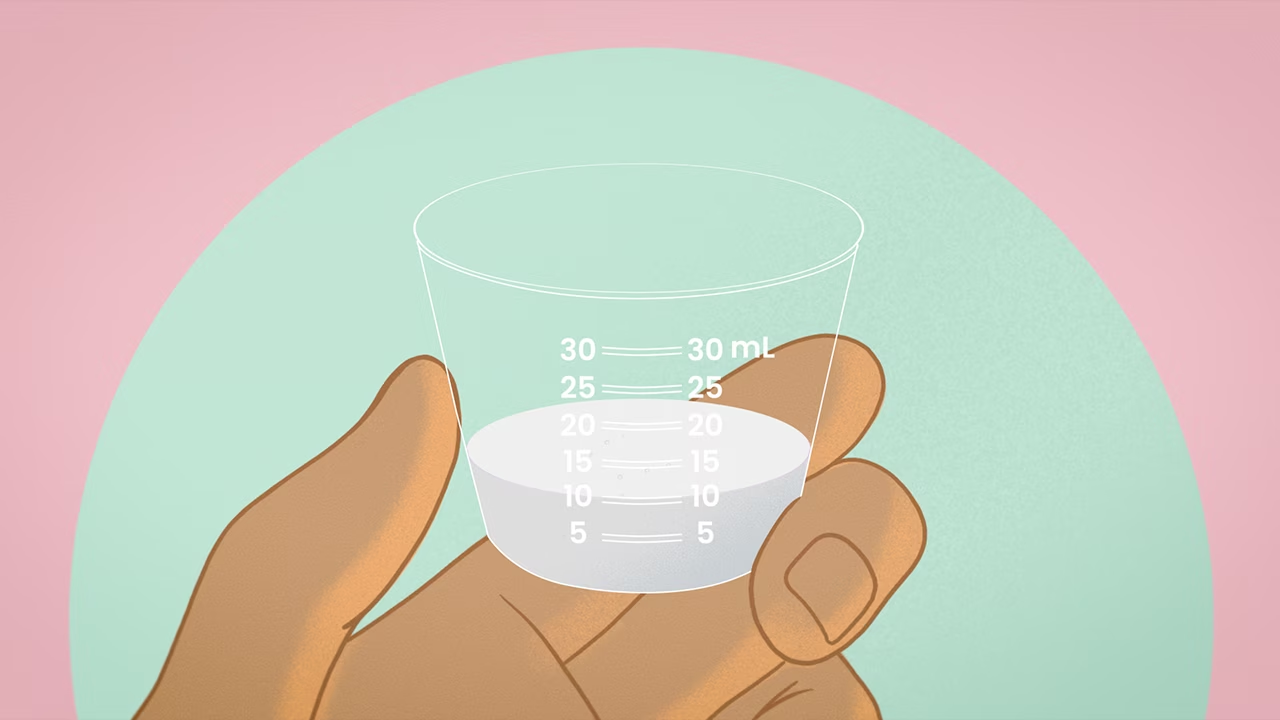
Dispersing GOMEKLI tablets for oral suspension
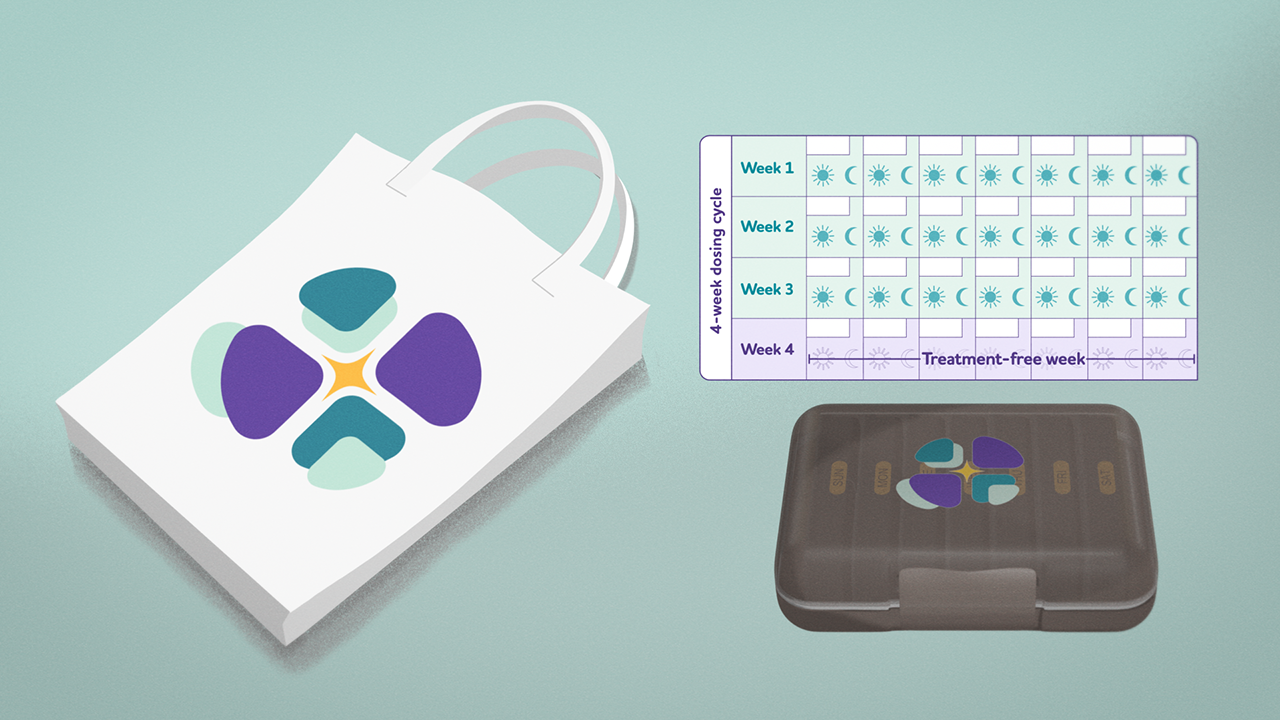
Setting up your GOMEKLI dosing calendar
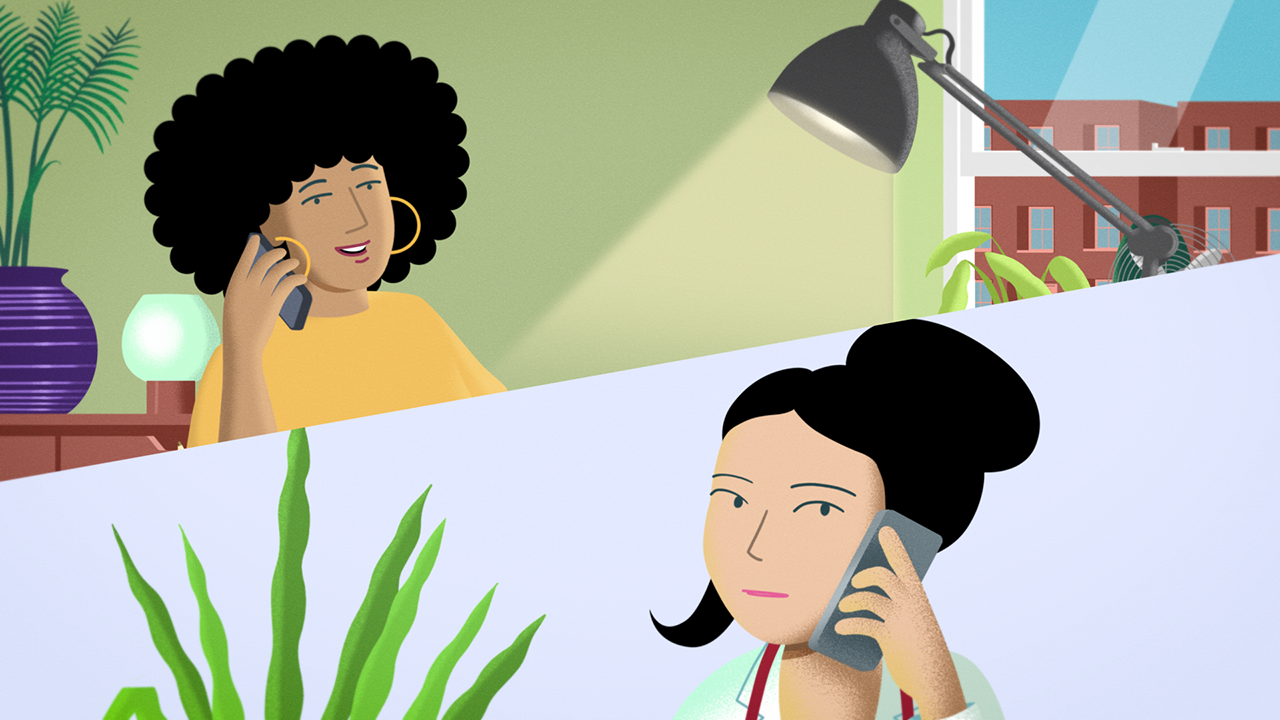
Managing possible side effects of GOMEKLI

Staying on track with treatment
Meet Seetal and her family
Morning Mama.
[Timothy]
Hey, Mama.
[Seetal]
How’d you sleep sweetheart?
[Timothy]
We slept well.
[Alex]
I didn’t…
Image onscreen:
Alex and Timothy enter the kitchen and greet Seetal as she is making breakfast. On the counter, there is leftover pancake batter on a mixer. Seetal is moving pancakes from the portable grill onto a serving plate. Timothy goes to grab a glass cup from the cabinet for his morning coffee.
[Seetal]
Right now, I’m just making breakfast, getting things started for the kids for the day. That way they can come out, have breakfast, and we can just get the day going from there.
Sometimes I’m the first one up, sometimes they’re all up before I am and just running around, and there is that bit of chaos, but it’s a fun, energetic chaos and I wouldn’t trade that for anything.
Image onscreen:
Timothy is pouring his morning coffee from the insulated drink dispenser. We shift to a mix of an in-action interview with Seetal and B-roll shots of her making pancakes for her boys. Seetal scoops out pancake batter onto the grill as she continues to talk about her boys.
[Seetal]
Morning, mija.
[Victoria]
Morning.
[Seetal]
What are you doing?
Image onscreen:
Victoria enters the kitchen and immediately goes to get a glass cup from the cabinet as she greets Seetal. Timothy and Alex are standing at the insulated drink dispenser, still pouring their drinks. Seetal continues to work on making pancakes at the counter.
[Seetal]
Mornings matter a lot in our house because it sets the tone for the day, everybody’s coming out, we’re saying good morning, and it’s just setting the day to go smoothly, you know, and starting it off with the right attitude together.
Image onscreen:
Seetal is seated in an interview chair, talking to an interviewer off-camera. The background shows a living space with plants, a mirror, a decorative ladder, a painting, and a floor-to-ceiling window covered with white sheer drapes.
Text onscreen:
Seetal
Living with NF1-PN and mother and caregiver to Victoria and Alex, living with NF1-PN and taking GOMEKLI (mirdametinib)
Seetal is being compensated by SpringWorks Therapeutics, Inc.
[Seetal]
My name is Seetal and I have three kids. Alex is the oldest, he’s 17, Timothy’s 15, and Victoria’s 11. All four of us, myself and my three kids, are living with neurofibromatosis type one with plexiform neurofibromas, or NF1-PN.
Image onscreen:
Victoria and Alex talk about their morning as they head towards the kitchen island to have a seat with Timothy, who is already seated. Victoria begins to move towards the fridge to grab her frozen waffles. Seetal is continuing to work on breakfast and briefly exits off screen.
[Victoria]
I don’t people until I get my morning waffles.
Image onscreen:
Victoria closes the freezer door during an in-action interview.
[Seetal]
NF1-PN affects each of us differently. But it’s something that touches every part of our day.
NF1 can cause tumors to grow along nerves throughout the body. They're called plexiform neurofibromas and they can affect how you move and how you feel. Both Alex and Victoria have this type of NF1 called NF1-PN.
Image onscreen:
Victoria places frozen waffles into the toaster. Video shifts to Seetal seated in an interview chair, talking to an interviewer off-camera.
[Seetal]
We were first introduced to mirdametinib, what is now GOMEKLI, through the clinical trial for Victoria. Her doctor told us the treatment goal of GOMEKLI was to reduce the size of her plexiform tumor by at least 20%.
Image onscreen:
The whole family is seated at the kitchen island eating breakfast. The serving plate of pancakes is passed around the family. On the table, there is a fruit bowl, paper towels, a butter container, various cups/mugs and breakfast plates. The family continues to eat and converse.
Text onscreen:
GOMEKLI (mirdametinib) is a prescription medicine used to treat adults and children 2 years of age and older with neurofibromatosis type 1 (NF1) who have plexiform neurofibromas that cause symptoms and cannot be completely removed by surgery. It is not known if GOMEKLI is safe and effective in children under 2 years of age.
[Seetal]
Going through the clinical trial experience helped us to understand the treatment, and later, after it was approved by the FDA, we discussed it as a treatment option for Alex.
Image onscreen:
Family continues eating breakfast and conversing while seated at the kitchen island.
Text onscreen:
GOMEKLI may cause serious side effects, including: eye problems, heart problems, and skin problems. Tell your healthcare provider if you are pregnant or plan to become pregnant. GOMEKLI can harm your unborn baby.
[Seetal]
Now, Alex and Victoria take GOMEKLI twice a day for three weeks and then they have a treatment free week. It’s part of our rhythm.
Image onscreen:
Victoria is standing at the counter with a medication organizer. She opens up the container, empties the medications into her hand, and takes it orally with water.
Text onscreen:
Please see Important Safety Information throughout and Full Prescribing Information including Patient Information.
[Seetal]
Sometimes, Alex has a hard time remembering to take his medication, so we got him a pill organizer to help him keep track.
Image onscreen:
Alex is in the bathroom at the countersink. He has a pill organizer in hand, pours the medications into his hand and orally takes his medication.
[Seetal]
This is our family calendar. It’s how we stay organized. I put all the kids’ doctors’ appointments on there just so they can look at it and know when they’ve got a doctor’s appointment, in addition to when they’re on their GOMEKLI for their three-week cycle and when their week break is. So, they know when they’re supposed to be taking their medication and when they are off for the week off cycle.
Image onscreen:
Seetal stands next to the family calendar hanging on a green-painted wall during an in-action interview. She points to various things listed on the calendar and she explains the importance of it.
[Seetal]
Having it up on the wall for the family calendar helps things feel less overwhelming. That way, it’s just there and we know what to expect and anticipate.
Image onscreen:
Seetal stands next to the family calendar hanging on a green-painted wall during an in-action interview. Seetal points to various dates and events on the calendar to emphasize the importance of them.
[Seetal]
In the morning, the kids are responsible for letting the dogs out. So, they can go out first thing in the morning and then they each are responsible for getting one of them breakfast and getting them set up for the day too. Routine helps all of us. With NF1-PN, energy levels can change fast. Structure gives the kids a sense of control.
Image onscreen:
Seetal is seated in an interview chair, talking to an interviewer off camera. Video then shifts to Timothy walking into the kitchen with a dog bowl and bending down to set the dog bowl on the floor for the family dog to have breakfast. Timothy pets the dog as it eats its breakfast.
[Seetal]
After breakfast, we typically transition into schoolwork. All three of the kids are homeschooled.
Image onscreen:
Seetal and her three kids, Alex, Timothy, and Victoria, are seated at a dining room table with workbooks, pencils, and a pencil cup with highlighters. The kids are working on their workbooks while Seetal is there to help them.
[Seetal]
Right now, the kids are working on their writing. Every day, I want them to write at least a couple of pages. Victoria likes to write different stories about the pets and what she thinks their adventures would be like. As a family with NF1-PN homeschooling works for us because they have a lot of doctor’s appointments and we have the flexibility so they’re not missing that education time and can still get things accomplished when they're just not feeling good.
Image onscreen:
Seetal and her three kids, Alex, Timothy, and Victoria, are seated at a table with workbooks, pencils, and a pencil cup with highlighters. The kids are working on their workbooks while Seetal is giving an in-action interview.
[Alex]
This works for me because it’s quiet. Here I can actually stay focused, stay calm, and not be overwhelmed by things. I know I need a break from schoolwork when I’m getting frustrated or I have a headache.
Image onscreen:
Seetal and her three kids, Alex, Timothy, and Victoria, are seated at a table with workbooks, pencils, and a pencil cup with highlighters. Victoria and Timothy are working on their workbooks while Alex is giving an in-action interview.
[Seetal]
Fatigue can be unpredictable, especially for Alex. Homeschooling gives Alex the flexibility to listen to his body without falling behind academically.
Image onscreen:
Seetal is seated in an interview chair, talking to an interviewer off camera.
[Alex]
Being at home makes it a lot easier to get my work done. I can sit wherever I’m comfortable, get up and move around when I need to, and break up my work so I don’t get exhausted throughout the day.
Image onscreen:
Alex is seated in an interview chair, talking to an interviewer off-camera. The background shows a dining table, cabinet, living room couch, and white sheer drapes on floor-to-ceiling windows in the background.
Text onscreen:
Alex
Living with NF1-PN and taking GOMEKLI (mirdametinib)
[Seetal]
After the kids are done with their schoolwork, they typically have some downtime to get their energy back.
Image onscreen:
Seetal and her three kids, Alex, Timothy, and Victoria, are seated at a table with workbooks, pencils, and a pencil cup with highlighters. The kids are working on their workbooks while Seetal is writing in a notebook.
[Seetal]
Alex has been really excited about learning how to play his guitar better, so after school he’s typically working on that.
Image onscreen:
Seetal is seated in an interview chair, talking to an interviewer off camera. Video then shifts to a close up of Alex strumming his guitar on the living room couch.
[Seetal]
Timothy is always building something. He comes up with the most incredible things and he’s able to put things together with such creative imagination.
[Timothy]
I like doing this after school because it helps me use my creative nature to make all sorts of funny and wacky things like a centipede with hair. Like this centipede here.
Image onscreen:
Video shifts from Alex playing guitar to Timothy in a playroom shuffling through Legos on a play table. In the background, there is black shelving filled with boxes, games, and toys. Timothy begins to build Legos while giving an in-action interview.
[Seetal]
Victoria likes to go into her room and practice with her medical supplies. She started a whole library of medical textbooks and journals in her room. Victoria has always been drawn to understanding her body and her disease. Learning about NF1 and plexiform neurofibromas makes it feel less scary for her and less out of her control.
Image onscreen:
Seetal is seated in an interview chair, talking to an interviewer off camera. Video then cuts to Victoria on her bedroom floor taking notes on various medical textbooks.
[Victoria]
So, when I was five-ish, we found out I had NF1-PN. I struggled when I was five with the fact that I had a plexiform fibroma, because I had no idea what that was. So, I got medical play therapy. So, I got stuff like this femur bone from my parents. And I just grew to absolutely love medical and want to help other kids like me.
Image onscreen:
Victoria is seated on her bedroom floor surrounded by medical textbooks, notebooks, skeletal figures while doing an in-action interview. In the background is a bunkbed, a window, and storage on the side with knick knacks.
[Seetal]
I think when she’s in her room, it’s not just for play, she’s preparing for something so much greater. She’s practicing how to talk about her disease and how to advocate for herself.
Image onscreen:
Victoria continues to read medical books on her bedroom floor before video shifts to Seetal being seated in an interview chair, talking to an interviewer off camera.
[Victoria]
I think it’s important to know as much as I can about NF1-PN.
Image onscreen:
Victoria continues to read medical books on her bedroom floor.
[Victoria]
That way I can teach others about it. More awareness of this disease and the treatments for it means more people can get the help that they need.
Image onscreen:
Victoria is seated in an interview chair, talking to an interviewer off camera. The background shows a fireplace with a chair and table next to it, a table against the wall with plants and books, a house tree, and wall art.
Text onscreen:
Victoria
Living with NF1-PN and taking GOMEKLI (mirdametinib)
[Seetal]
This condition affects all of our lives, but for Victoria, learning more about it has become a source of strength for her.
Image onscreen:
Victoria continues to read medical books on her bedroom floor and take notes.
[Seetal]
After some quiet time, the kids are back to being energetic and active. A lot of afternoons, Alex is out in the garage working out. Alex has always had an interest in working out and staying physically fit and healthy. For him, it’s not about building muscle, it’s about managing fatigue. It gives him confidence without pushing him past his limits.
Image onscreen:
Seetal is seated in an interview chair, talking to an interviewer off camera. Video shifts to seeing Alex on a pec fly exercise machine in the garage. In the background, we see the garage door with little windows at the top, some storage boxes, and a punching bag.
[Alex]
NF1 definitely affects how my body feels. So, working out gives me a way to stay connected to it instead of getting frustrated by it.
Image onscreen:
Alex sits on pec fly machine giving an in-action interview, followed by close up shots of the weights and Alex concentrating on lifting.
[Timothy]
Right now, I am cooking spaghetti tonight for dinner for the family. I find cooking really satisfying and I also find it relaxing.
Image onscreen:
Timothy cooks spaghetti for family dinner during an in-action interview. Timothy is wearing a chef’s hat with a wooden spoon in his hand. He is stirring a pot with red sauce on the stove while another pot is beside it boiling with spaghetti.
[Seetal]
Timothy loves cooking. It’s a passion and he loves doing things for others. So, I think that’s where he gets a lot of that drive for cooking because it’s a way of showing others love and doing something nice for them. When my husband James gets home, the kids love filling him in about their day. Dinner’s a really important time for us as a family. With NF1-PN, everybody's day can look a little bit different in terms of energy and pain. But dinner is when we slow down and reconnect. We don’t need dinner to be perfect. We just need to be together. That’s what matters the most.
Image onscreen:
Timothy serves spaghetti from a serving bowl onto his own dinner plate. Family is seated at the kitchen island again, with plates, drinks in cups, condiments/salad dressing on the table, and salad on some of the dinner plates. Family continues to pass around the serving bowl of spaghetti and putting some on their plate as they continue conversing and enjoying their food.
[Seetal]
After dinner, Alex and Victoria take their second dose of GOMEKLI.
Image onscreen:
Seetal is seated in an interview chair, talking to an interviewer off camera.
[Seetal]
When Victoria first started the clinical trial, she experienced nosebleeds for the first few weeks. After one year of being on GOMEKLI, we’d gotten the results we wanted, met the goals of the trial, and her plexiform had shrunk. These results gave us confidence that this could be a good option for Alex.
Image onscreen:
Seetal is seated in an interview chair, talking to an interviewer off camera. Video then shifts to Victoria at the kitchen island with family and takes her medication orally. In the background, it’s getting dark outside through the windows, there’s a cup of water for Victoria, and game sheets in front of everyone.
Text onscreen:
The most common side effects of GOMEKLI in children include:
diarrhea, muscle, joint, and bone pain, stomach (abdominal) pain, vomiting, headache, skin redness, swelling, or pain around the fingernails or toenails, nausea
[Seetal]
When Alex started GOMEKLI commercially, his experience was a little bit different. A couple weeks in, he had a skin reaction that looked like a severe acne breakout. His doctors added topical treatments, and since then, it’s been manageable.
Image onscreen:
Family is at the kitchen island getting ready to play a game. Seetal has Alex’s medication organizer in hand and gives Alex his evening medication. Alex then takes his medication orally with a cup of water that was sitting on the table.
Text onscreen:
These are not all of the possible side effects of GOMEKLI. Call your doctor for medical advice about side effects.
[Seetal]
He’s only been on GOMEKLI for eight months, so it’s early to know if his tumor is shrinking, but his symptoms have improved, so we’re optimistic, especially given the results that Victoria saw. This is just our experience, and everybody’s experience is different.
Image onscreen:
Family is still at the kitchen island playing a game. Dad is keeping score and writing numbers.
Text onscreen:
Individual results may vary.
[Seetal]
Most nights, we wind down by playing games together. We play a lot of creative games where there’s storytelling involved and they can use their imaginations and it’s always fun to see what they come up with together. For Alex, it’s also a way for him to practice his math skills without it feeling like work. After everything that’s done in the day, those last moments are important because I want the kids going to bed feeling loved. This is when they’re the most relaxed, the worry fades and they just get to be kids.
Image onscreen:
Family is still at the kitchen island playing a game. There are a bucket of dice and an action shot of Victoria rolling dice. Video shifts briefly to Seetal being seated in an interview chair, talking to an interviewer off camera before shifting back to family game night. General shots of family interacting, rolling dice, and conversing are on screen.
[Seetal]
On paper, this family might look like a medical study– three kids and a mom all with NF1-PN. But around this table, they’re just kids telling a story together. This condition is part of our lives, and for Alex and Victoria, GOMEKLI is part of how they manage it. But this, being together, finding the joy in life, this is who we are.
Image onscreen:
Family continues to play a game at the kitchen island. Lots of conversing and laughter is seen.
Image onscreen:
The GOMEKLI logo appears large in the center of the screen with disclaimer information in a single line along the bottom.
Text onscreen:
©2026 SpringWorks Therapeutics, Inc. All rights reserved. GOMEKLI is a registered trademark of SpringWorks Therapeutics, Inc.
SpringWorks Therapeutics, Inc. is a healthcare company of Merck KGaA, Darmstadt, Germany. C_GOM_US_0535 04/26
Meet Kylie
What is GOMEKLI?
GOMEKLI (mirdametinib) is a prescription medicine used to treat adults and children 2 years of age and older with neurofibromatosis type 1 (NF1) who have plexiform neurofibromas (PN) that cause symptoms and cannot be completely removed by surgery.
It is not known if GOMEKLI is safe and effective in children under 2 years of age.
Image onscreen:
We see Kylie sitting at a large table, typing on a laptop and writing in a journal. She is in a dining room with large windows and French doors. The room is filled with natural light.
[Kylie]
I learned fairly early on in my life that I shouldn't have to apologize for who I am. I always knew I was different. I tried to fit in. It didn't work. So, I said, “Well, how about I try for once embracing who I am and see what happens?”
Image onscreen:
Kylie is seated in an interview chair, talking to an interviewer off-camera. The background shows a living space with a fireplace, mantle, coffee table, and sideboard with lamp. A name super graphic appears onscreen.
Text onscreen:
Kylie
Living with NF1-PN and taking GOMEKLI® (mirdametinib)
Kylie is being compensated by SpringWorks Therapeutics, Inc.
[Kylie]
Even before I was born, my parents knew there was a risk of me having NF1. My father had it. My older brother had it, so it was a 50-50 shot whether I would be born with the same condition.
Image onscreen:
Kylie continues writing in her journal. She then sets her pen down and gazes reflectively out the window.
[Kylie]
I was a baby when they started suspecting it, and then I had the genetic testing to confirm Neurofibromatosis type 1 with plexiform neurofibromas or NF1-PN.
Image onscreen:
Kylie is seated in an interview chair, talking to an interviewer off-camera.
[Kylie]
Early in my life, some of the only symptoms that really began appearing were the cafe au lait spots on my skin, the early hints of a plexiform forming on my back, and the bowed growth of the bones in my right leg.
Image onscreen:
Kylie continues writing in her journal.
[Kylie]
So, when I was around two or three years old, that bowed bone in my right leg, the tibia, snapped in half. I wasn't able to climb on the play structures at preschool the same way.
Image onscreen:
Kylie is seated in an interview chair, talking to an interviewer off-camera.
[Kylie]
I was never going to be the first one picked in P.E. So, while I was, y’know, happy to explain everything that I knew, y’know, talk about the leg break, my surgeries, my walker, and all these things that were helping me grow, kids slowly became less accepting than I was.
Image onscreen:
Kylie is standing next to a window and holding a large pet lizard in her arms. She gently strokes its head and back with her finger, and then gives it a kiss on the chin. She sets the lizard down on a towel that is laid out over the top of the lizard’s enclosure. She takes out a toothbrush and cleans the lizard’s scales by rubbing the toothbrush across its back and tail.
[Kylie]
I was other than the rest of the kids, and I learned to hide it for a bit of time because, y’know, I was trying to make the world more comfortable for them. It's a real process trying to learn to love yourself and accept yourself. And every step forward that I took, it felt like there were hands dragging me back.
Image onscreen:
Kylie is seated in an interview chair, talking to an interviewer off-camera.
[Kylie]
One of the early signs that my symptoms were beginning to change came my senior year of high school, I believe it was, when I would be sitting in class doing my work, and out of nowhere, my right leg would spasm and slam into the wall.
Image onscreen:
Kylie finishes writing and shuts her notebook. Closeup shot of her placing the notebook into a small backpack.
[Kylie]
We started making doctor's appointments, looking at the MRIs. We were dealing with a 19 centimeter long plexiform neurofibroma. The doctor had to tell me that this was an inoperable tumor, and that we could not cut open my leg and remove it.
Image onscreen:
Kylie is seated in an interview chair, talking to an interviewer off-camera.
[Kylie]
Instead, we had to try different work around methods. This tumor was coiled around my nerves.
Image onscreen:
Kylie picks up her backpack, stands up from the table, and closes the lid of her laptop computer.
[Kylie]
So, it would be pressing on them and causing a spasm that ran all the way down my leg.
Image onscreen:
Kylie is seated in an interview chair, talking to an interviewer off-camera.
[Kylie]
I think the only thing that's actually worse than the pain was the fear of pain that developed. I couldn't carry the kids I babysat on my hip anymore or have them sit in my lap when I read to them because it'd cause the pain to come back. I didn't go on walks with my family as often anymore. And all these different things that I wanted to do that I had been doing suddenly stopped being possible. It was very difficult to find a doctor that understood NF1-PN. Most of my journey came from being bounced around to different departments and being told time and time again that I was the very first patient with NF1-PN that they ever got to look at.
Image onscreen:
A young woman is seated on a stool at a kitchen island. In the background is a kitchen with dark brown upper cabinets, a tiled backsplash, butcherblock countertops, and teal lower cabinets. On the kitchen island there are multiple notepads and books laid out in preparation for a tutoring session. Kylie walks into frame and warmly greets the student. Kylie then begins reviewing a notebook with the student. Closeup shots of Kylie pointing to various diagrams with her pen.
[Kylie]
So, I became almost the guinea pig. Once I had spent hours online researching different forums, talking to different people, it gave me the courage that I needed to be able to look at these doctors and say, you know, “We've come so far to this point, but I need more.”
Image onscreen:
Kylie is seated in an interview chair, talking to an interviewer off-camera.
[Kylie]
Eventually, we found a clinic near us that specializes in NF1-PN. And within one appointment, he looked at me and said, “We've got all your medical records, we're setting you up with a medical team to take care of all of your needs, so that way it can be facilitated under one roof.”
Image onscreen:
Kylie continues her discussion with the student. A disclaimer graphic appears along the bottom of the screen. The camera cuts back to a shot of Kylie’s interview.
Text onscreen:
GOMEKLI (mirdametinib) is a prescription medicine used to treat adults and children 2 years of age and older with neurofibromatosis type 1 (NF1) who have plexiform neurofibromas that cause symptoms and cannot be completely removed by surgery. It is not known if GOMEKLI is safe and effective in children under 2 years of age.
[Kylie]
It was…the biggest sigh of relief ever. That's when we first talked about GOMEKLI, or mirdametinib. My doctor said the treatment goal of GOMEKLI was to reduce the size of my plexiform tumors by at least 20%.
Image onscreen:
Kylie continues her tutoring session. A disclaimer graphic appears along the bottom of the screen.
Text onscreen:
Please see Important Safety Information throughout and Full Prescribing Information including Patient Information.
[Kylie]
After living with that uncertainty for so long, I really wanted to try something that might help reduce the size of those tumors. We discussed the potential side effects, and we decided to try it. I started GOMEKLI in April of 2025. Since starting GOMEKLI, my symptoms have started to ease and it's been a huge change for me.
Image onscreen:
Kylie continues her tutoring session. A disclaimer graphic appears along the bottom of the screen.
Text onscreen:
The most common side effects of GOMEKLI in adults include: diarrhea, nausea, muscle, joint, and bone pain, vomiting, tiredness. These are not all of the possible side effects of GOMEKLI. Call your doctor for medical advice about side effects.
[Kylie]
I did experience some side effects, like skin rash, some GI issues, but through careful work with my care team, topicals, diet changes, and an attitude of moving forward and keeping my head up, I've been able to manage it.
Image onscreen:
Kylie is seated in an interview chair, talking to an interviewer off-camera.
[Kylie]
SpringWorks CareConnections has been a really great resource because not only do they help my treatment by checking in with me, tracking symptoms, but they provide that extra layer of support. SpringWorks CareConnections calls every three weeks because that would be around the time I finished a single cycle of the GOMEKLI and I'm getting a refill. So it's the perfect opportunity to ask new questions or voice concerns before having to start another cycle.
Image onscreen:
Kylie is seated in an interview chair, talking to an interviewer off-camera. A disclaimer graphic appears along the bottom of the screen.
Text onscreen:
Individual results may vary.
[Kylie]
My recent scans have shown that the PN in my leg has decreased in size. This is just my experience, and everybody's experience may be different.
Image onscreen:
Kylie is seated in an interview chair, talking to an interviewer off-camera.
[Kylie]
I feel really optimistic. I feel like all that fear I had of going to appointments and being turned away, bounced around, or told that they don't know what to do is completely gone.
Image onscreen:
Kylie meets up with a friend outside on a backyard deck. They sit on a bench and have tea. The friend has a dog, a German Shepherd, who gets lots of pets. The two women talk with each other and smile.
[Kylie]
Through the care that I've been able to receive, I'm seeing results. I've been able to start doing more of the things that I enjoy—teaching, writing, and spending time with friends and not spend the entire time being afraid.
Image onscreen:
Kylie is seated in an interview chair, talking to an interviewer off-camera. The video then fades to black.
[Kylie]
I'm moving beyond fear and being the leader of my own life.
Text onscreen and voice-over:
Important Safety Information
Before taking GOMEKLI, tell your healthcare provider about all of your medical conditions, including if you:
- Have eye problems
- Have heart problems
-
Are pregnant or plan to become pregnant. GOMEKLI can harm your unborn baby
Females who are able to become pregnant:
-
Your healthcare provider should check to see if you are pregnant before
you begin treatment with GOMEKLI.
-
Use effective birth control (contraception) during treatment with
GOMEKLI and for 6 weeks after your last dose.
-
Tell your healthcare provider right away if you become pregnant or think
you may be pregnant during treatment with GOMEKLI.
Males with female partners who are able to become pregnant:
-
Use effective birth control (contraception) during treatment with
GOMEKLI and for 3 months after your last dose.
-
Tell your healthcare provider right away if your female partner becomes
pregnant or thinks she may be pregnant during treatment with GOMEKLI.
-
Your healthcare provider should check to see if you are pregnant before
you begin treatment with GOMEKLI.
-
Are breastfeeding or plan to breastfeed. It is not known if GOMEKLI passes into your breastmilk.
-
Do not breastfeed during treatment with GOMEKLI and for 1 week after
your last dose.
-
Talk to your healthcare provider about the best way to feed your baby
during this time.
-
Do not breastfeed during treatment with GOMEKLI and for 1 week after
your last dose.
How should I take GOMEKLI?
-
Take GOMEKLI exactly as your healthcare provider tells you to take it. Your
healthcare provider may change your dose, temporarily stop, or permanently
stop treatment with GOMEKLI if you develop certain side effects.
-
Take GOMEKLI twice a day, about 12 hours apart, for 21 days, followed by 7
days off treatment, to complete a 28-day treatment cycle. Your healthcare
provider will decide how many treatment cycles are right for you.
- Take GOMEKLI with or without food.
-
GOMEKLI comes in two different dosage forms, GOMEKLI capsules and GOMEKLI
tablets for oral suspension. Your healthcare provider will decide the dosage
form and dose of GOMEKLI that is right for you.
-
If you take GOMEKLI capsules: Swallow each capsule whole with drinking
water. If more than 1 capsule is required, swallow 1 capsule at a time. Do
not open, break or chew the capsules.
-
If you take GOMEKLI tablets for oral suspension, either:
-
Swallow each tablet for oral suspension whole with drinking water. If
more than 1 tablet is required, swallow 1 tablet at a time.
-
OR
-
Disperse the tablets for oral suspension in drinking water to make a
liquid (suspension) before you take or give GOMEKLI.
-
Swallow each tablet for oral suspension whole with drinking water. If
more than 1 tablet is required, swallow 1 tablet at a time.
-
If you miss a dose of GOMEKLI, skip the missed dose and take your next dose
at your regularly scheduled time.
-
If you vomit at any time after taking GOMEKLI, do not take an additional
dose. Take your next dose at your regularly scheduled time.
What are the possible side effects of GOMEKLI?
GOMEKLI may cause serious side effects, including:
-
Eye problems. GOMEKLI may cause eye problems that can lead to blindness. Your healthcare provider will check your vision before and during treatment with GOMEKLI. Tell your healthcare provider right away if you get any of the following signs or symptoms of eye problems:
- Blurred vision
- Loss of vision
- Other changes to your vision
- Blurred vision
-
Heart problems. GOMEKLI may lower the amount of blood pumped by your heart, which is common in children during treatment with GOMEKLI and can also be severe. Your healthcare provider will do tests before you start GOMEKLI treatment, every 3 months during your first year of treatment, and then as needed to make sure your heart is working properly. Tell your healthcare provider right away if you get any of the following signs or symptoms of heart problems:
- Coughing or wheezing
- Shortness of breath
- Swelling of your ankles and feet
- Tiredness
- Increased heart rate
- Coughing or wheezing
-
Skin problems. Skin rashes are common with GOMEKLI in both adults and children and can also be severe. GOMEKLI can also cause hair loss (alopecia). Tell your healthcare provider if you develop any of the following signs or symptoms of skin problems:
- Flat skin rash
- Raised bumps on the skin
- Skin bumps that look like acne
- Skin redness
- Itchy rash
- Peeling skin
- Flat skin rash
The most common side effects of GOMEKLI in adults include:
- Diarrhea
- Nausea
- Muscle, joint, and bone pain
- Vomiting
- Tiredness
The most common side effects of GOMEKLI in children include:
- Diarrhea
- Muscle, joint, and bone pain
- Stomach (abdominal) pain
- Vomiting
- Headache
-
Skin redness, swelling, or pain around the fingernails or toenails
- Nausea
GOMEKLI may cause fertility problems in females, which may affect your ability to have children. Talk to your healthcare provider if you have concerns about fertility.
These are not all of the possible side effects of GOMEKLI. Call your doctor for medical advice about side effects. You may report side effects to FDA at 1-800-FDA-1088.
Please see full Prescribing Information, including Patient Information and Instructions for Use, available on GOMEKLI.com.
Image onscreen:
The GOMEKLI logo appears large in the center of the screen with disclaimer information in multiple lines along the bottom.
Text onscreen:
©2026 Merck KGaA, Darmstadt, Germany or its affiliates. All rights reserved. GOMEKLI and SpringWorks CareConnections are registered trademarks of SpringWorks Therapeutics, Inc. SpringWorks Therapeutics, Inc. is a healthcare company of Merck KGaA, Darmstadt, Germany. US-GOM-00052 06/26
Meet Julie and Jacoby
We see Jacoby sitting casually on a carpeted floor, leaning back against an armchair as he strums an electric guitar that is plugged into an amplifier. He is in a living area of a home with two armchairs, a table with a frame and houseplant, and artwork on the walls. Closeup shot of Jacoby’s left hand playing chords on the neck of the guitar.
Julie:
Jacoby has always been this bright, happy kid full of energy, full of curiosity. He loves music, sports, and just being a kid.
Image onscreen:
Julie is seated in an interview chair, talking to an interviewer off-camera. The background shows a living space with an armchair, a window seat with pillows, a piano, and a side table with stacked books. A name super graphic appears onscreen.
Text onscreen:
Julie
Mother and caregiver to Jacoby living with NF1-PN and taking GOMEKLI (mirdametinib) Julie is being compensated by SpringWorks Therapeutics, Inc.
Julie:
But behind all of that, there’s this part of his story that has shaped so much of our lives – his journey with neurofibromatosis type 1 with plexiform neurofibromas or NF1-PN.
Image onscreen:
Jacoby makes an adjustment on his amplifier by turning a couple knobs. He then continues to strum his guitar. Closeup shots of his hands and face as he plays.
Julie:
His dad and I first noticed something when Jacoby was just a few months old. He had this cute coffee colored mark on his belly. At first, we didn’t think much of it and thought it might just be a birthmark, but as we started paying more attention, we noticed more of them.
Image onscreen:
Julie is seated in an interview chair, talking to at an interviewer off-camera.
Julie:
We didn’t know what they meant. I did what most new parents would do – I searched the internet. I read that Jacoby’s marks might be something called café-au-lait spots.
Image onscreen:
We see a shot of a blue-colored lava lamp, with bubbles slowly morphing inside the lamp. The video then switches back to Jacoby as he makes some adjustments on the tuning knobs on the head of his guitar. He continues to strum the guitar, then gets up, sets his guitar down on a stand, and unplugs a cable from the amplifier.
Julie:
And that’s the first time I came across neurofibromatosis type 1, or NF1. I remember reading NF1 is a genetic disorder that can cause non-cancerous tumors to grow along nerves throughout the body.
Image onscreen:
Julie is seated in an interview chair, talking to at an interviewer off-camera.
Julie:
My heart sank. No one in our family had ever faced something like this. It wasn’t something that had ever been on our radar. But my gut told me something was wrong, and I pushed for answers.
Image onscreen:
Julie is seated on a large corner couch. The wall behind has wood wainscoting and there is a round coffee table with a tray and candle in front of Julie. She holds a photo album in her lap. Jacoby walks into frame and joins her on the couch. Together, they look through the photo album and point and reminisce over family photos.
Julie:
I brought it up to our pediatrician, but she wasn’t familiar with NF1 and initially wasn’t too concerned. She did some research, made some calls, and got us connected with the NF1 clinic at the local university. The clinic took a sample of Jacoby’s blood to run tests. When the results came back, we got the official diagnosis of NF1.
Image onscreen:
Julie is seated in an interview chair, talking to at an interviewer off-camera.
Julie:
We were scared. We didn’t know what to do. The NF1 team told us all we could do was wait and see how Jacoby’s symptoms progressed.
Image onscreen:
Julie and Jacoby continue to look through the photo album.
Julie:
For a while life felt normal. Jacoby was happy, active, hitting all of his milestones. But then, around five-years-old, he started waking up in the middle of the night with intense ankle pain. Doctors told us NF1 patients often experience pain like this, and they didn’t think it was a tumor. And then one day I pressed on his abdomen, and he jolted in pain.
Image onscreen:
Julie is seated in an interview chair, talking to at an interviewer off-camera.
Julie:
I knew something was wrong. I didn’t want my son to keep experiencing this pain and discomfort. That's when I demanded imaging.
Image onscreen:
Julie and Jacoby continue to look through the photo album.
Julie:
Jacoby’s scan showed a large plexiform neurofibroma, or PN, that could not completely be removed by surgery. It had been growing all along pressing on nerves in his abdomen and groin.
Image onscreen:
Julie is seated in an interview chair, talking to at an interviewer off-camera.
Julie:
That’s when we realized that we weren’t just dealing with NF1. We were dealing with NF1-PN. Jacoby’s tumor could keep growing, causing pain, affecting his mobility. It was terrifying.
Image onscreen:
Jacoby is seated on a bench in an ice-hockey arena. He is talking to his father, who is seated on the bench next to him. We see hockey equipment on the bench next to Jacoby. Jacoby then puts on his ice skates. Closeup shot of Jacoby tying his skate laces. A disclaimer graphic appears along the bottom of the screen.
Julie:
But our NF doctor was incredible. The moment he showed us the scan he said, “There’s a clinical trial and I think Jacoby would be perfect for it.” That’s how we first heard about mirdametinib, what is now GOMEKLI.
Text onscreen:
GOMEKLI (mirdametinib) is a prescription medicine used to treat adults and children 2 years of age and older with neurofibromatosis type 1 (NF1) who have plexiform neurofibromas that cause symptoms and cannot be completely removed by surgery. It is not known if GOMEKLI is safe and effective in children under 2 years of age.
Image onscreen:
Julie is seated in an interview chair, talking to at an interviewer off-camera.
Julie:
We talked with Jacoby’s doctor about what to expect during the trial.
Image onscreen:
Closeup shot of Jacoby grabbing his gloves off the bench. We then see Jacoby putting on his helmet and mask. He then grabs his hockey stick.
Julie:
His doctor said the treatment goal was to reduce the size of his plexiform neurofibroma by at least 20%. We trusted our doctor and wanted to do whatever we could to help Jacoby.
Image onscreen:
Julie is seated in an interview chair, talking to at an interviewer off-camera.
Julie:
We decided we wanted to be in this trial.
Image onscreen:
Jacoby and his father stand up from the bench and walk along the edge of the rink. A disclaimer graphic appears along the bottom of the screen.
Text onscreen:
Please see Important Safety Information throughout and Full Prescribing Information including Patient Information.
Julie:
We hoped with the reduction of the tumor that Jacoby might get some relief from the pressure the tumor size was causing.
Image onscreen:
Julie is seated in an interview chair, talking to at an interviewer off-camera.
Julie:
Within weeks, we noticed his symptoms had started to ease.
Image onscreen:
The camera follows Jacoby as he skates across the ice rink with his hockey stick. We see his father just outside the rink, leaning forward with his forearms resting on the divider. He watches Jacoby skate by and shouts encouragement. A disclaimer graphic appears along the bottom of the screen, followed by a second disclaimer graphic.
Text onscreen:
GOMEKLI may cause serious side effects, including: eye problems, heart problems, and skin problems. Tell your healthcare provider if you are pregnant or plan to become pregnant. GOMEKLI can harm your unborn baby.
Text onscreen:
The most common side effects of GOMEKLI in children include:
diarrhea, muscle, joint, and bone pain, stomach (abdominal) pain, vomiting, headache, skin redness, swelling, or pain around the fingernails or toenails, nausea
Julie:
Throughout treatment, he experienced some skin problems including mild rashes and skin infection, but using a cream that his doctor recommended helped. He also had nausea, vomiting, diarrhea, tumor pain, intermittent headaches, and intermittent joint pain.
Image onscreen:
Julie is seated in an interview chair, talking to at an interviewer off-camera. A disclaimer graphic appears along the bottom of the screen.
Text onscreen:
These are not all of the possible side effects of GOMEKLI. Call your doctor for medical advice about side effects.
Julie:
The off weeks when he didn’t take the medication were difficult, but we worked with his health care provider to manage the side effects through hydration, rest, and over-the-counter pain relievers.
Image onscreen:
Jacoby does a slalom exercise by skating through a line of orange cones on the ice. The video briefly cuts back to Julie’s interview shot before showing Jacoby’s father using his foot to push pucks across the ice to Jacoby. Jacoby lines up in front of the goal and uses his stick to hit the pucks from his father into the goal. A disclaimer graphic appears along the bottom of the screen.
Text onscreen:
Individual results may vary.
Julie:
He also experienced a decrease in the amount of blood pumped by his heart. This did not cause symptoms and resolved without changing the dose of GOMEKLI. But Jacoby is tough, and he stuck with it. After one year of being on GOMEKLI, we got the results we wanted, met the goals of the trial, and his tumor had shrunk. Jacoby continued on GOMEKLI as part of the optional long-term follow-up phase of the trial. As part of that, he continues to get regular MRIs.
Image onscreen:
Julie is seated in an interview chair, talking to at an interviewer off-camera.
Julie:
Jacoby was only seven years old when he started treatment with GOMEKLI and there has been partial regrowth of the PN as he has continued in the study.
Image onscreen:
Jacoby and his father have left the ice and now sit down together on a bench. Jacoby takes off his helmet and talks with his father. The video briefly cuts to Julie’s interview shot before going back to Jacoby and his father sitting on the bench. Jacoby’s father affectionately ruffles Jacoby’s hair.
Julie:
His doctor has told us that this happens in some patients, and he remains on GOMEKLI treatment. I still believe that starting GOMEKLI and continuing on GOMEKLI is the right choice for us. This is just our experience and every patient’s experience is different.
Image onscreen:
Jacoby is seated in an interview chair, talking to at an interviewer off-camera. The background shows a living area with chairs, French doors leading to another room, and artwork on the walls. A name super graphic appears onscreen.
Text onscreen:
Jacoby
Living with NF1-PN and taking GOMEKLI (mirdametinib)
Jacoby is being compensated by SpringWorks Therapeutics, Inc.
Jacoby:
When I go in to talk to my doctor, he’s really down to earth.
Image onscreen:
Jacoby and his parents walk through a wooded park. Jacoby’s dad is holding a travel coffee mug. The video intermittently cuts back to Jacoby’s interview shot before continuing with the walking scene. The family continues to walk through the park and along a small lake, talking with each other and smiling. They walk over to a bench, sit down, and continue talking.
Jacoby:
He makes things really easy to understand. The way that my doctor talks to me makes me feel like this is something that I can handle for the rest of my life, so it’s easier to focus on the things I love, like hockey, football, guitar, and just life.
Julie:
It’s been incredible watching Jacoby learn to advocate for himself. He and his doctor have such a good relationship. He asked questions, he understands what his medication does, and that matters because having the right team, having doctors who listen to him, who respect him, has made all the difference.
Image onscreen:
Julie is seated in an interview chair, talking to at an interviewer off-camera.
Julie:
If I could go back and tell anything to myself when Jacoby was a baby, I would say, “Don't worry, it’s going to be okay.”
Image onscreen:
Jacoby sits in between his parents on the park bench as they continue to talk. His parents then lean in on either side of him and give him a hug. The video fades to white.
Julie:
I would tell other parents to trust your instincts. Push for answers. Surround yourself with doctors who listen and know that NF1-PN is not a roadblock. It's just a different path.
Image onscreen:
The GOMEKLI logo appears large in the center of the screen with disclaimer information in multiple lines along the bottom.
Text onscreen:
©2025 SpringWorks Therapeutics, Inc. All rights reserved. GOMEKLI is a registered trademark of SpringWorks Therapeutics, Inc. SpringWorks Therapeutics, Inc. is a healthcare company of Merck KGaA, Darmstadt, Germany. C_GOM_US_0294 11/25
Meet Austin
Hear Austin talk about NF1-PN and his experience on GOMEKLI.
The video title and GOMEKLI indication statement appear onscreen with the GOMEKLI logo small in the lower right corner.
Text onscreen:
Meet Austin:
GOMEKLI Guide Patient Ambassador
Text onscreen and voice-over:
What is GOMEKLI?
GOMEKLI (mirdametinib) is a prescription medicine used to treat adults and children 2 years of age and older with neurofibromatosis type 1 (NF1) who have plexiform neurofibromas (PN) that cause symptoms and cannot be completely removed by surgery.
It is not known if GOMEKLI is safe and effective in children under 2 years of age.
Image onscreen:
We follow Austin from behind as he walks into a church, past stained-glass windows, and then down a flight of stairs. We then see him seated at a conference table in a smaller room, looking at a bible, and writing notes in his notebook.
[Austin]
Ministry for me is about showing up for people in their hardest moments. I am there as the shepherd, I’m there to remind them and guide them through those hard times. I’ve been there, I’ve done that, so I know what it means to carry something heavy, invisible, and lifelong. I’ve lived with neurofibromatosis type 1 with plexiform neurofibromas, NF1-PN, for almost my entire life. NF1 is a genetic disorder that causes non-cancerous tumors to grow along the nerves throughout the body.
Image onscreen:
Austin is seated in an interview chair, talking to at an interviewer off-camera. The background shows a living space with plants, a bookshelf, coffee table, artwork, rug, French doors, and a window. A name super graphic appears onscreen.
Text onscreen:
Austin
Living with NF1-PN and taking GOMEKLI® (mirdametinib)
Austin is being compensated by SpringWorks Therapeutics, Inc.
[Austin]
I was two and a half years old when my parents noticed a dark discoloration on my back that looked like a bruise. When it didn't go away, they took me to the doctor. Eventually, scans revealed it was a type of tumor called plexiform neurofibroma and I was diagnosed with NF1-PN. That was the beginning of this journey.
Image onscreen:
Austin is seated at a conference table in a small room. He reads a bible and makes notes in his notebook. There is a mug of tea on the table. In the background are stained-glass windows, a lamp, and a couch. Closeup shots of Austin’s hand holding a pen and writing.
[Austin]
NF1 runs in my family. My dad and grandmother both have it. But no one in the family has tumors like me. By the time I was four, I had to have surgery to remove part of it.
Image onscreen:
Austin is seated in an interview chair, talking to at an interviewer off-camera.
[Austin]
Later that year, I needed another surgery to remove more of that tumor because it was pressing back into my spine. We named my tumor Ralph the Runaway Mouse after one of my favorite children books. It helped us talk about it and normalize it. He’s just a part of me, so to speak.
Image onscreen:
Austin walks along some church pews. He is then shown seated, looking up towards the front of the church, then down at the floor. The video cuts back to the interview shot before showing Austin in the church again.
[Austin]
I was already learning that this condition was not going to be easy to live with. I remember being scared about a few things, but my parents were always honest with me about what was going on. Sometimes doctors would try to pull my parents out of the room, but my parents would tell them that “Austin has to live with this, so he needs to be involved in the conversation.” It helped me be somebody that speaks up and advocates for myself.
Image onscreen:
Austin stands in front of a large table in a room in his house. On the table there are a variety of items associated with camping, such as a lantern, first aid kit, backpack, tarp, tent, etc. He checks over the various items. He then consults a map, planning his hiking route. He packs the items in his backpack, puts on his backpack, grabs some other gear, and then exits his house through the front door. The video occasionally cuts back and forth with the interview shot.
[Austin]
Growing up, NF1-PN affected almost everything in my life. I could not always keep up physically with kids my age, so there was a lot of misunderstanding with coaches and teachers. I remember one time, at a basketball game that I got hit hard right in my tumor. And getting yelled at to get right back up when I was in excruciating pain. People don’t always see what you are carrying. When I got a little older, I started talking to doctors myself. I would tell them where it hurt, and what activities would make it worse. My NF1 specialist, treated me like a person, not just another patient. He understood that I know my own body better than anyone and pushed me to find a treatment that worked for me. We tried several pain regulation treatments to try to manage the symptoms that my plexiforms caused. There were a few years in my early twenties when I was not on treatment. My pain was manageable; I just needed a break from all the appointments. But eventually the pain came back. I was having spasms, and the pain was so intense at times, I could hardly move around. I decided to reengage with care and started seeing a new doctor.
Image onscreen:
Austin carries his backpack and gear outside towards the back of his SUV. The rear lift gate opens automatically, and Austin puts his gear in the trunk. As the trunk closes, the GOMEKLI indication statement appears along the bottom of the screen.
[Austin]
That’s when I heard about a clinical trial for a treatment called mirdametinib, what is now GOMEKLI.
Text onscreen:
GOMEKLI (mirdametinib) is a prescription medicine used to treat adults and children 2 years of age and older with neurofibromatosis type 1 (NF1) who have plexiform neurofibromas that cause symptoms and cannot be completely removed by surgery. It is not known if GOMEKLI is safe and effective in children under 2 years of age.
Image onscreen:
Austin is seated in an interview chair, talking to at an interviewer off-camera. The video then cuts to Austin standing in the forest as he consults his map and compass.
[Austin]
My doctor told me the treatment goal of GOMEKLI was to reduce the size of my plexiform tumors by at least 20%.
Image onscreen:
Austin is seated in an interview chair, talking to at an interviewer off-camera. A disclaimer graphic appears along the bottom of the screen. The video then cuts to a shot following Austin as he hikes along a trail in the forest.
Text onscreen:
Please see Important Safety Information throughout and Full Prescribing Information including Patient Information.
[Austin]
When I heard that, I was just astonished. I was in. I was excited about the idea of my tumor shrinking and hoped that it would relieve some of the symptoms I had because of my tumor.
Image onscreen:
Austin is seated in an interview chair, talking to at an interviewer off-camera. A disclaimer graphic appears along the bottom of the screen.
Text onscreen:
The most common side effects of GOMEKLI in adults include: diarrhea, nausea, muscle, joint, and bone pain, vomiting, tiredness. These are not all of the possible side effects of GOMEKLI. Call your doctor for medical advice about side effects.
[Austin]
Starting GOMEKLI was a commitment. 21 days on, 7 days off, with regular MRIs, and side effects such as rashes and digestive issues, but I worked closely with my doctor to manage these. I learned what worked for me such as staying hydrated and using baby lotion on the rash.
Image onscreen:
We see Austin from the front and side as he hikes along a path in the forest. He uses hiking poles to help with stability.
Text onscreen:
Individual results may vary.
[Austin]
And then, after a year on GOMEKLI, we got the results. A 57% reduction in the size of my tumor.
Image onscreen:
Austin is seated in an interview chair, talking to at an interviewer off-camera. The video then cuts to a wide profile shot of Austin hiking through some long grass, with a forest visible in the background.
[Austin]
I was speechless. It was the first time that something has made a noticeable difference in my NF1-PN. Those results really motivated me to stay on GOMEKLI. This is just my experience, and everyone’s experience may be different.
Image onscreen:
We see Austin in a closeup shot as he drinks water from a reusable water bottle. He then walks into his campsite and sets down a bag on a folding chair. His tent is visible in the background, which is set out on some grass surrounded by trees and bushes. There is a small folding table in front of his chair, as well as a metal firepit stocked with firewood. Austin sets up a portable gas stove and pours water into a pot, which he then puts on the stove to boil. He checks on the water and then sits in his chair, waiting for the water to boil. The video then briefly cuts back to the interview shot.
[Austin]
Now, GOMEKLI is just part of my daily routine. I take it once in the morning and once at night. It doesn’t interfere with my work or the way I want to live my life. If there’s something I could say to someone who is newly diagnosed with NF1-PN, find a doctor who listens to you. Speak up, even if you’re not sure that it matters. And you’re not alone. Reach out to others that are living with NF1-PN. Theres a whole community of us out here that understands.
Image onscreen:
Austin stands at a pulpit in a church and addresses his congregation. Behind Austin, we see lots of dark wood paneling, as well as the wall-mounted silver pipes of an organ. Stained glass windows line the sides of the room. Some shots show the backs of heads and shoulders of people as they listen to Austin preach. The video then fades to white.
[Austin]
Ministry is about being real with people. I show up not in spite of my NF1-PN, but because of it. I know pain, I know frustration. On treatment with GOMEKLI, my tumor is smaller. I have the strength and confidence to focus on the things I love.
Image onscreen:
A disclaimer with the title “Important Safety Information” fades onscreen with the GOMEKLI logo small in the lower right corner. The title and GOMEKLI logo stay in place as the text on screen changes as the presentation of Important Safety Information progresses.
Text onscreen and voice-over:
Important Safety Information
Before taking GOMEKLI, tell your healthcare provider about all of your medical conditions, including if you:
- Have eye problems
- Have heart problems
- Are pregnant or plan to become pregnant. GOMEKLI can harm your unborn baby
Females who are able to become pregnant:- Your healthcare provider should check to see if you are pregnant before you begin treatment with GOMEKLI.
- Use effective birth control (contraception) during treatment with GOMEKLI and for 6 weeks after your last dose.
- Tell your healthcare provider right away if you become pregnant or think you may be pregnant during treatment with GOMEKLI.
- Use effective birth control (contraception) during treatment with GOMEKLI and for 3 months after your last dose.
- Talk to your healthcare provider about the best way to feed your baby during this time.
- Are breastfeeding or plan to breastfeed. It is not known if GOMEKLI passes
into your breastmilk.
- Do not breastfeed during treatment with GOMEKLI and for 1 week after your last dose.
- Talk to your healthcare provider about the best way to feed your baby during this time.
How should I take GOMEKLI?
- Take GOMEKLI exactly as your healthcare provider tells you to take it. Your healthcare provider may change your dose, temporarily stop, or permanently stop treatment with GOMEKLI if you develop certain side effects.
- Take GOMEKLI twice a day, about 12 hours apart, for 21 days, followed by 7 days off treatment, to complete a 28-day treatment cycle. Your healthcare provider will decide how many treatment cycles are right for you.
- Take GOMEKLI with or without food.
- GOMEKLI comes in two different dosage forms, GOMEKLI capsules and GOMEKLI tablets for oral suspension. Your healthcare provider will decide the dosage form and dose of GOMEKLI that is right for you.
- If you take GOMEKLI capsules: Swallow each capsule whole with drinking water. If more than 1 capsule is required, swallow 1 capsule at a time. Do not open, break or chew the capsules.
- If you take GOMEKLI tablets for oral suspension, either:
- Swallow each tablet for oral suspension whole with drinking water. If more than 1 tablet is required, swallow 1 tablet at a time.
- Disperse the tablets for oral suspension in drinking water to make a liquid (suspension) before you take or give GOMEKLI. See the “Instructions for Use” that come with your medicine for instructions on how to prepare and take GOMEKLI tablets for oral suspension.
- If you miss a dose of GOMEKLI, skip the missed dose and take your next dose at your regularly scheduled time.
- If you vomit at any time after taking GOMEKLI, do not take an additional dose. Take your next dose at your regularly scheduled time.
What are the possible side effects of GOMEKLI?
GOMEKLI may cause serious side effects, including:
- Eye problems. GOMEKLI may cause eye problems that can lead to blindness.
Your healthcare provider will check your vision before and during treatment
with GOMEKLI. Tell your healthcare provider right away if you get any of the
following signs or symptoms of eye problems:
- Blurred vision
- Loss of vision
- Other changes to your vision
- Heart problems. GOMEKLI may lower the amount of blood pumped by your heart,
which is common in children during treatment with GOMEKLI and can also be
severe. Your healthcare provider will do tests before you start GOMEKLI
treatment, every 3 months during your first year of treatment, and then as
needed to make sure your heart is working properly. Tell your healthcare
provider right away if you get any of the following signs or symptoms of
heart problems:
- Coughing or wheezing
- Shortness of breath
- Swelling of your ankles and feet
- Tiredness
- Increased heart rate
- Skin problems. Skin rashes are common with GOMEKLI in both adults and
children and can also be severe. GOMEKLI can also cause hair loss
(alopecia). Tell your healthcare provider if you develop any of the
following signs or symptoms of skin problems:
- Flat skin rash
- Raised bumps on the skin
- Skin bumps that look like acne
- Skin redness
- Itchy rash
- Peeling skin
- Diarrhea
- Nausea
- Muscle, joint, and bone pain
- Vomiting
- Tiredness
The most common side effects of GOMEKLI in children include:
- Diarrhea
- Muscle, joint, and bone pain
- Stomach (abdominal) pain
- Vomiting
- Headache
- Skin redness, swelling, or pain around the fingernails or toenails
- Nausea
GOMEKLI may cause fertility problems in females, which may affect your ability to have children. Talk to your healthcare provider if you have concerns about fertility.
These are not all of the possible side effects of GOMEKLI. Call your doctor for medical advice about side effects. You may report side effects to FDA at 1-800-FDA-1088.
Please see full Prescribing Information, including Patient Information and Instructions for Use.
Image onscreen:
The GOMEKLI logo appears large in the center of the screen with disclaimer information in a single line along the bottom.
Text onscreen:
©2025 SpringWorks Therapeutics, Inc. All rights reserved. GOMEKLI is a registered trademark of SpringWorks Therapeutics, Inc. C_GOM_US_0332 07/25
NF1‑PN and GOMEKLI: Real‑world and clinical perspectives
A purple background featuring headshots of four people. From left to right, the photos are labeled with the names: Allison Fischer, CNP; Austin; Kylie; Seetal.
Text onscreen:
NF1-PN: Real-World and Clinical Perspectives
Learn about a treatment for adults and children
Image onscreen:
Screen transitions to a presentation slide featuring the headshot of Allison Fischer, CNP.
Text onscreen:
Chapter 1: An Overview of GOMEKLI
Allison Fischer, CNP
Cleveland Clinic
Children’s Hospital
[Allison Fischer]
Hi everyone. Welcome. Thank you guys so much for being with us for lunchtime. We're excited to have you here with us.
My name is Allison Fischer and I am a pediatric nurse practitioner from Cleveland, Ohio. I'm working at Cleveland Clinic Children's Hospital and I will be one of the presenters today during this presentation. So thank you again for joining.
This presentation is sponsored by SpringWorks Therapeutics. SpringWorks Therapeutics is committed to developing therapies for people with rare diseases, and honored to deliver a much needed treatment option, GOMEKLI, or mirdametinib.
GOMEKLI is the first FDA-approved treatment for both adults and children above the age of two, with neurofibromatosis type 1, who have plexiform neurofibromas that cause symptoms and cannot be completely removed by surgery. It is not known if GOMEKLI is safe and effective in children under the age of two.
Before starting GOMEKLI, you should tell your health care provider about all of your medical conditions, especially if you have underlying eye or heart problems. If you're able to become pregnant, your doctor should give you a pregnancy test before you begin treatment, as GOMEKLI can harm your unborn child.
Males with female partners should tell their provider right away if their partner becomes pregnant during treatment with GOMEKLI. It is not known if GOMEKLI passes into your breast milk, so you should talk to your doctor about the best way to feed your baby during this time as well. We will also go over additional important safety information later in the presentation.
Today, I will be giving an overview of GOMEKLI clinical trial results as well as GOMEKLI dosing and administration information. Then I'll be joined by three very special guests for a Q&A session about NF1-PN and GOMEKLI. So let's get started.
Neurofibromatosis type 1, or NF1, is a genetic condition that affects about 1 in 2500 babies. Plexiform neurofibromas, which can be called PNs or plexiforms, are tumors that form in some of the people living with NF.
The content I'll discuss today is only for people who have NF1 with plexiform neurofibromas. Plexiforms are slightly different from other types of neurofibromas associated with NF1, such as cutaneous neurofibromas. People who aren't living with or caring for someone with NF1-PN don't always understand its impact.
The most common symptoms are pain on and around a plexiform, difficulty moving around because of a plexiform on a joint or a limb, and changes in appearance. While surgery to manage NF1-PN may be an option for some, it can be restricted dependent on the size, location, or other underlying medical reasons. Even when it is possible, we know that up to 85% of plexiforms cannot be completely resected.
Additionally, patients can experience complications after surgery, and in some cases plexiforms can grow back. We know that nearly 1 in 4 plexiforms removed by surgery can have the potential to regrow. So until GOMEKLI was approved, there was no FDA-approved treatment options for adults with plexiform neurofibromas associated with NF1.
GOMEKLI is a MEK inhibitor, which means it's a targeted therapy, so not the same as chemotherapy. And it works by helping to block certain signals in the body that cause the growth of plexiform neurofibromas.
GOMEKLI was studied in a large single-arm clinical trial called ReNeu. It included 114 total people, 58 of them being adults and 56 children and adolescents between the ages of two and 17 years old, with neurofibromatosis type 1 associated plexiform neurofibromas.
In the GOMEKLI clinical trial, the primary measure of efficacy, or how well it worked, was something called a confirmed overall response rate. An overall response meant that a person treated with GOMEKLI had a plexiform shrink by 20% or more, as shown by MRI, or a magnetic resonance image.
When we say a confirmed part, that means that another MRI scan done showed that showed at a later date, showed that the plexiform remained smaller, or remained at least that 20% shrinkage or more. And you may be wondering why a 20% reduction equated an overall response. And this is because a 20% change in plexiform neurofibroma volume is the standard benchmark that we use in NF1-PN in clinical trials. Now let's look at the results. 41% or 24 out of the 58 adults treated with GOMEKLI saw their plexiforms shrink by at least 20%.
The visual on the screen shows that the top circle, so if you look at that dark purple top circle on the top, that's like the original volume of a plexiform neurofibroma. And then that lighter purple would show what a 20% reduction or shrinkage of that plexiform tumor looks like. And so we know that 52% or 29 out of the 56 children and adolescents treated with GOMEKLI saw their plexiforms shrink by at least 20% as well. In a separate post hoc analysis of people who responded, 15 out of 24 adults and 15 out of 29 children and adolescents saw their plexiforms shrink by more than 50% in size.
You may be wondering when people taking GOMEKLI started to see results. Some people on GOMEKLI saw their plexiforms shrink by at least 20% within months of starting GOMEKLI. The median or middle amount of time it took for plexiforms to begin shrinking by at least that 20% was 7.8 months in adults and 7.9 months in children and adolescents.
How a medicine is taken is also an important aspect of treatment, so I'd like to provide a quick overview on GOMEKLI dosing. GOMEKLI is an oral therapy that is taken twice a day, about 12 hours apart, and can be taken with or without food. Your health care provider may decide the right dose of GOMEKLI based on your weight and height.
They also can interrupt, reduce or permanently stop GOMEKLI treatment if you experience certain side effects. GOMEKLI comes in two different forms: tablets for oral suspension and capsules that come in two different sizes based off of the dosing. Oral suspension means that the tablets just can mix or disperse into water, so the medicine can be taken as a liquid, which is important because this may allow for GOMEKLI to be easier or more easily taken for people who have difficulty swallowing pills or tablets.
The tablets can also be swallowed whole if preferred. The GOMEKLI prescribing information includes instructions on how to mix or disperse the tablets for oral suspension into water, and you can find this information or the full prescribing information at GOMEKLI.com.
GOMEKLI has a four-week dosing cycle. But what does this mean? So each GOMEKLI cycle is for 28 days or about four weeks long. For the first three weeks or 21 days of each of those cycles, GOMEKLI is taken twice a day, every day. And then for the following seven days, GOMEKLI is not taken at all. After the treatment-free week, the next cycle would begin and just restarting that so 21 days of being taken every day and then a week off. It's important to take GOMEKLI as directed by your health care provider.
It's important to note that GOMEKLI may cause serious side effects, including problems to the eyes, heart or skin.
GOMEKLI may cause eye problems that can lead to blindness. Your health care provider will check your vision before and during treatment with GOMEKLI. Tell your health care provider right away if you get any of the following signs or symptoms, including blurred vision, loss of vision, or other changes to your vision.
GOMEKLI may lower the amount of blood pumped by your heart, which is common in children during treatment with GOMEKLI and can sometimes be severe. Your health care provider will do tests before you start GOMEKLI treatment every three months during that first year, and then on an as-needed basis, to continue making sure that your heart is working properly.
Tell your health care provider right away if you get any of the following signs or symptoms, including coughing or wheezing, shortness of breath, swelling of your ankles and feet, tiredness or increased heart rate. So even though we have these intermittent check-ins during therapy, it's important to let us know also, if anything happens in between. Skin rashes are common with GOMEKLI in both adults and children and can be severe.
GOMEKLI can also cause hair loss or alopecia. So tell your health care provider right away if you get any of the following signs or symptoms like a flat skin rash, raised bumps on the skin, skin bumps that look like acne, skin redness, itchy rash, or peeling skin. Your health care provider will check your vision and make sure your heart is working properly before and throughout GOMEKLI treatment.
But again, it's still important to tell us if any of those things are occurring in between. If you're a female who is able to become pregnant, your health care provider should check to see if you are pregnant before beginning treatment with GOMEKLI. It's also recommended to use effective birth control or contraception during treatment with GOMEKLI, and for at least six weeks after your last dose. Tell your health care provider right away if you become pregnant or think you may be pregnant during the treatment with GOMEKLI.
If you're a male with a female partner who's able to become pregnant, use effective birth control or contraception during treatment with GOMEKLI and for at least three months after your last dose. Tell your health care provider right away if your female partner becomes pregnant or thinks she may be pregnant during treatment with GOMEKLI.
If you're breastfeeding or plan to breastfeed, it is not quite known if GOMEKLI passes into your breast milk, so do not breastfeed during treatment with GOMEKLI and for at least one week following your last dose. Talk to your health care provider about the best way to feed your baby during these times.
GOMEKLI may cause fertility problems in females, which may affect your ability to have children. Talk to your health care provider if you have any concerns about fertility. Important would also be to tell your health care providers about any of the medications you're taking, including prescription and over-the-counter medications, vitamins and herbal supplements.
These are not all the possible side effects of GOMEKLI, so call your doctor for medical advice about additional side effects, and you may report side effects to the FDA at 1-800-FDA-1088.
The most common side effects of GOMEKLI in adults and children and adolescents were diarrhea, nausea, muscle, joint, and bone pain, and vomiting. Adults also experienced tiredness, while children also experienced stomach pain, headaches, skin redness, swelling, or pain around the fingernails and toenails.
The most common severe abnormal blood tests results in adolescents and children as well as adults involved an increased enzyme called creatine phosphokinase, or CPK, for short. Some children were also noted to experience decreased white blood cell or neutrophil counts. Most people taking GOMEKLI did not have to stop treatment, though, due to side effects. So even though they were experiencing some, the majority of patients that did not have to cease therapy for that reason.
Image onscreen:
Screen transitions to a presentation slide featuring the headshot of Austin, Kylie, and Seetal.
Text onscreen:
Chapter 2: GOMEKLI Ambassador Q&A
Image onscreen:
Screen transitions to a presentation slide featuring Allison introducing the Ambassadors.
Text onscreen:
Q&A SESSION
Image onscreen:
Screen transitions to a presentation slide featuring the headshot of Austin, Kylie, and Seetal.
Text onscreen:
Austin
GOMEKLI Patient Ambassador; currently on treatment
Kylie
GOMEKLI Patient Ambassador; currently on treatment
Seetal
GOMEKLI Caregiver Ambassador; has 2 children currently on treatment
[Allison]
In this next part of the presentation, I'll be joined by three very special guests for a Q&A session about NF1-PN and GOMEKLI. Please welcome GOMEKLI Patient Ambassadors Austin and Kylie, who are both currently on treatment with GOMEKLI. And GOMEKLI Caregiver Ambassador Seetal, who is living with NF1-PN and also has three children with NF1-PN, two of whom are currently on GOMEKLI. Remember that we'll discuss here today is their personal experience with both NF1 as well as GOMEKLI treatment, and everyone's experience may differ a bit. Thank you for being here today. We have so much to talk about, so I'm going to join you guys here and we can begin.
All right. So I'm going to start by asking a lay-up question hopefully but when were you guys first diagnosed with NF1-PN?
[Austin]
So I was first diagnosed when I was two and a half years old. My parents noticed a large, discolored mark on my back that resembled a bruise in the lower left flank. You know, just thinking it was a bruise and didn't think too much of it.
Both my parents were in the health care field, and after it didn't go away for a week or so and it stayed the same, they started to have a little bit of concern. My father and paternal grandmother both have NF1, and because of this, my family always knew there was a possibility of NF1 being passed on to me or my siblings.
My parents suspected the bruise could be related to that, so they took me to my pediatrician to have a follow up to see what was going on, and they learned the bruise on my back was actually a plexiform neurofibroma, and through testing I was diagnosed with NF1 with the plexiform neurofibroma.
[Kylie]
All right. So similar to Austin, there was always a possibility for me to be born with NF1-PN. My father was born with neurofibromatosis, and my brother as well, four years before me. So, when I came out having spots that looked like those café-au-lait marks, it was pretty obvious from that very beginning that I was also going to be diagnosed with this condition, and genetic testing later on did confirm, in fact, that I was positive for NF1-PN.
[Allison]
And Seetal, you were diagnosed as a teenager, correct?
[Seetal]
Correct. I wasn't diagnosed until I was 15. I was having abdominal pain, bad enough that we ended up in the emergency room and the doctor came out and he was telling me and my mom that it had all the clinical markers for NF1-PN, including the fact that the pain was caused by a plexiform neurofibroma in my abdomen. We didn't even know what it meant. We hadn't ever heard neurofibromatosis before, but he explained it was a rare genetic condition, and from there we got a neurologist, met with them.
I was officially diagnosed with NF1-PN, and from there we were monitored with routine MRIs and things just kind of went on.
[Allison]
And I know that we mentioned you have three children that had NF1-PN. So how was your experience with their diagnosis?
[Seetal]
With my eldest, we noticed his café-au-lait spots at first when he was little. We spoke with his pediatrician and were recommended to see an ophthalmologist, and from there he was around nine months old when we were able to get his first eye exam, and they were able to identify the NF1 markers in his eyes, and things were kind of confirmed, the suspicions were confirmed and he was diagnosed with NF1-PN as well.
Like Alex, my son Timothy had café-au-lait spots at birth and genetic testing later confirmed his diagnosis as well of NF1-PN when he was a couple of years old. And with my daughter, she had café-au-lait spots that we noticed a couple of days after she was born and she underwent genetic testing at a year, and which was the earliest of any of the kids but it helped her brothers had already had it, and she was confirmed to have NF1-PN as well.
[Allison]
And Austin and Kylie, I'd like to go back to your childhood diagnoses and early years with NF1-PN. What was it like living with the condition and what at that time did management look like for the most part? And Kylie, we can start with you.
[Kylie]
Yeah. So, I like to say that living with NF1-PN is essentially like living with the smorgasbord of genetic conditions. I mean, every person in this room is a caregiver or is a patient themselves knows that we are not identical to anybody else in this room. We all are going through very similar things and we can relate on experiences, but we have different stuff going on. And for the beginning of my life, in my journey with this condition, it actually wasn't as largely focused on the plexiforms as it is now.
When I was a little girl, we discovered very early on that I was one of the lucky few that had the bone bowing in my tibia, and when I was two years old, the bone completely snapped in half. And I had a nonunion in that leg for about three years. I was in a cast, I had a bone stimulator, and then I went into surgery and got rods inserted, the whole shebang, including a KAFO to boot, which is that brace that goes all the way from the tip of your toes up to your hip. So that was largely the focus of my treatment.
I did have a plexiform that the doctors were aware of. It was in the middle of my back, right where those first café au lait spots were found as a baby. But it wasn't until I was a bit older and had gotten what I thought was going to be the main crux of my condition under control, that I realized there was something else going on. When I was in high school, around 16-17 years old, I started having these muscle spasms in the middle of class where I would be trying to do my work, listen to the teacher and my right leg would just jut out and slam into the wall against my will.
Obviously this wasn't normal, and even not knowing what it was, I assumed that we were going to need to go and talk to some professionals about this. Sure enough, it was being caused and tied to a 19-centimeter-long plexiform that was growing in my right thigh.
We did a long MRI. It was about six hours long to first identify this growth and figure out exactly what we were dealing with and what we could do about this. And it was in 2018, I believe, when the issue first started. So this was long before a treatment like GOMEKLI was available. So we were once again thrown into that ocean of questions. What do we do? Who do we go to? Can anything be done at all? So it was a long journey. It caused a lot of confusion because this wasn't something we had really dealt with before. We always knew I had had a plexiform, but for the very first time, it was now affecting my ability to live my life, to be able to enjoy being a teenager, to live without pain. And we tried multiple rounds of cryoablation therapy, which was essentially them trying to freeze the tumor using these needles.
But after one round, two rounds, three rounds, we realized this is just symptomatic. This isn't actually healing the issue. So we went back to the drawing board. And after hearing about it on what I believe was either one of the Sunday morning talk shows or some other group where people are sitting around talking about what's happening in the world, we found out about MEK inhibitors and started the very long journey to getting on them and starting a path that I am now very glad to be on.
[Allison]
Thank you so much.
[Austin]
Yeah, so my toddler years were filled with many doctor visits to monitor the tumors and deal with back pain, and we ended up even nicknaming my one tumor Ralph. And just out of one of my favorite childhood books. And my doctors warned my parents that if the tumor grew, I would need to undergo surgery to remove part of it, which would be a high risk, due to the potential of complications. If I could speak. And lo and behold, the doctors were right that it would, that it grew. And by the time I was four and a half years old, I had my first major surgery to partially remove or debulk, one of my tumors. And that portion they had to remove was actually the size of a foam football out on my back.
So what a 4 or 5 year old kid and I had to have a foam football removed from my back. And after that surgery, I remember I was bedridden for an extended period of time and then going to physical therapy to learn how to learn how to walk again. And then just so I was getting back on my feet, just ten months later, I had to undergo another surgery because the tumor started growing back into the spine again and this time the portion they removed was about the size of a golf ball. Recovery was still the same, and I remember this was during like the holiday times as well. So I was bedridden during all the times where I'd like to go out and play in the snow.
But yeah, it was one of those just a long, hard journey with that.
[Allison]
Yeah, absolutely. And to the testament of how long and chronic this journey is, was there ever a point in time where you actually disengaged from care or the, you know, the appointments became too much and you weren't following with medical providers? And if so, can you tell us about that and kind of what prompted you to come back to medical attention?
[Austin]
Yeah, definitely. As I was growing up, my pain levels just started to vary a lot, and it got to a point where my pain was controllable, well, uncontrollable at first. So I had to spend several weeks in the hospital, followed by a few days of bedrest, and saw several doctors, from pediatricians to pain management, NF specialist. We'd try over-the-counter medications to help manage it. And then just by some reason, by the time I was 18, the pain just started to either minimize or I just got so used to it that I felt that I'm doing good. You know, I made probably one of the biggest mistakes I like to say I've made in my life and just balled. I fell out of regular care, going to see my NF doctor or even really my regular doctor as well.
After graduating high school, not dealing with much pain, one of my biggest thing I was determined to join the military and something that had always been a dream of mine. I talked to a recruiter, but my NF1-PN was a big issue and made it impossible for me to join. So instead, I put that, I pursued a career in law enforcement, and I probably wore my badge for about six years. But, NF1-PNs are relentless, and they come back. They came back to where I needed to go back into care. And that's what I eventually did. And I knew it was just time to see the doctor again. So I made an appointment to talk to a neuro oncologist, and we talked about options, and she told me about a trial that was coming up for mirdametinib. And I decided that that sounded right for me, and I wanted to get on board with that. I knew I couldn't live my life the way it was, and my doctors and I both agreed that it was a good treatment plan for me.
[Allison]
And I imagine the trial that you were referring to is when you learned for the first time about GOMEKLI.
[Austin]
Yes. So that's what GOMEKLI ended up being called, was GOMEKLI the mirdametinib trial. And during my appointments, my oncologist mentioned that there was that clinical trial and I was on board with it. I've been on previous clinical trials, and I was anxious to see something new that could work. She explained the goal of the trial was to shrink the tumor by at least 20%, in adults and children ages two and up. And then in 2020, we learned that I qualified for the trial and I got started.
[Allison]
Very good. And Seetal, I think your GOMEKLI story began with your youngest child. Is that correct?
[Seetal]
Correct. We first learned about GOMEKLI with our daughter Victoria. And we first discovered her PN in the summer of 2020. And it was completely by accident. Her dad was playing with her. He went to pick her up and noticed what felt like a small pebble in her armpit. And it couldn't have been more than like the size of a small pea. And a lot of people might overlook it and dismiss it, but because of their health and everything, we knew it could be more. We knew better. And she later had an MRI and it showed the full scope of the condition, and it was a lot bigger than the size of a pea. It was a hard point, you know. But it it wrapped around her chest wall from about the front of it, close to her spine, from the sternum to close to her spine. And it was pressing up against her left lung so it couldn't fully inflate. And we couldn't believe that it had been growing in there the whole time she'd been playing, running around, you know, like any other kiddo. Hadn't complained about pain. She kept up with her brothers and the office called to go over, schedule an appointment, have an in-depth conversation with her hematologist oncologist about options. And he presented us with, he explained the treatment had to be discussed immediately.
It wasn't a point where we could, like, sit and wait and monitor. And surgery also was a recommended by her team just because of where it was and it being so invasive. They wanted to try treatment first for her, and we were given the option to enroll in the clinical trial for mirdametinib, and you know, we heard about it.
They told us that part of the clinical trial, she'd have routine appointments, monitor her condition, everything from echocardiograms to EKGs to MRIs, you know, see her ophthalmologist more and they sent us home with a ton of information. But at the end of it, we decided that the clinical trial was the best option for her at that point. So towards the end of 2020, Victoria started her treatment journey on mirdametinib. Despite her age, she handled the trial incredibly well. In fact, she thought it was cool to be a part of it and loved telling people about it.
[Allison]
Of course, awesome. And how about you, Kylie?
[Kylie]
Well, I feel a little left out because I wasn't in that trial. But, you know, even before GOMEKLI was, you know, finished with these trials and completely approved. I had heard of these MEK inhibitors, and like I said, I set down on the path to try to get to them.
But man, I think everybody has that one road in their city that's just full of cracks and potholes and beds, and you hate driving on it. Now imagine that, but it's a medical journey because I can tell you, we had a lot of pit stops, breakdowns and hit every wall imaginable trying to get to a point where we found somebody who we could talk to. Who knew what these new medicines were, what they could do, and could help us on this journey.
I feel like that's one of the biggest hurdles a lot of people face is being able to not only find the team of doctors and caregivers that they need, but getting them to coordinate with one another. Because it's not just a matter of going and grabbing a pill, it's a matter of making sure that it is the right treatment for you, that you have everything managed, and that was part of this wild ride I had gone on. I was getting the echocardiogram, the eye exams, going here, there, asking every person that we could.
All right, what's next? What's next? What are we going to get to that end point where I can get started on this? And it wasn't until I found a wonderful hematology oncology team that I sat down with after many tears had been cried and many walls have been hit. And he had said the name for the first time. He said, have you ever heard of GOMEKLI? I told him, no. What is that? Tell me. And he was very informative. He was very good. He told me about what the medicine did, what the potential side effects were, and I left his office with a prescription the same day. So, you know, he really made the effort to get to know my medical history, discuss those side effects with me, such as the rash, diarrhea, nausea; muscle, joint, bone pain, vomiting, tiredness. But I just wanted to try something to address this PN and the conversation with him gave me that confidence to move forward. It was a good option for me, and I did start GOMEKLI that same day in April of 2025.
[Allison]
Sounds awesome. And, so it sounds like you and your doctor had a very robust conversation about what to expect with GOMEKLI. Was that the case for you? Austin and Seetal?
[Austin]
Yes. My doctor discussed the potential side effects with me and hoped to see the results by the first year of taking medication and went over all the same side effects that Kylie mentioned as well.
[Seetal]
Yeah. With my daughter, we went over the side effects ranging from nausea, fatigue, skin reactions, hair loss, to more of the serious ones like vision problems. We were given information ahead of time to take home and review before starting, and when we started treatment, he told us to give it about a year at least to see full results, though we might start seeing things sooner.
[Allison]
You know, when I'm counseling families as a health care provider, you know, I think it's super important that patients have real realistic expectations going into any treatment, really, but treatment with a MEK inhibitor in particularly like GOMEKLI.
And so during those initial conversations or what I call like a priming appointment, we talk about three major things. And I, it sounds like that's the case with your guys' healthcare providers as well, but especially just the goals of treatment, the length of time we expect you to be on treatment, and then the side effects that could potentially accompany that medication, and what does that look like? How do we manage that?
And so starting to treatment, starting treatment I think it's important to recognize our goal isn't necessarily always shrinkage, because we know that that can take a bit of time before that comes to fruition. And so stability can sometimes be key with the hope that shrinkage does come in the months to come. I also, with MEK inhibitors it's hard for how long we stay on it. But the goal that we always counsel on, at least in our office, is to start treatment with the intention of being on it for a year or two at least, unless toxicity or side effects make it intolerable to do so. But giving it that time to really create that sustainable response is important.
And I think the third thing, especially contributing to quality of life on medication is what do the side effects look like? What is my day to day going to look like? And what are we going to do about it? How are we going to tackle it? So prepping for side effects is key. And I think that at the beginning, frequent appointments for that eye monitoring, for MRIs, for echocardiograms and getting plugged in with all of the specialties that can help make it as much as, as tolerable and as comfortable as possible, is important. So that way we know what to expect and we know what to do about it.
And I think, you know, at least in my field and I think Seetal, you can probably relate to this as well, but being in a pediatric field, making sure that that's explained to our pediatric patients at an appropriate developmental age, but also that caregivers are on the same page is super, super important. And knowing that we have ways to manage certain side effects and you aren't walking through that journey alone, but have advice on how to how to go about that as is ultra important. So usually understanding what to expect, knowing we have plans to help alleviate your concerns, make jumping into treatment a little bit easier. And so that's what our goal is as health care providers as well.
And what have your guys' results been on GOMEKLI? Kylie, we could start with you.
[Kylie]
Say I'll go first. Well, I can, making sure I'm there. I have not kicked any more walls. That's a good thing. The muscle spasms are gone. And I am very happy to say that that large PN on my leg has decreased in size significantly.
[Seetal]
Victoria's PN has shrunk while she's been on GOMEKLI, and I can say that once it started shrinking, her symptoms started improving. One year after being on GOMEKLI we got the results we wanted. The goals were met of the trial and her tumor had shrunk. Her experiences from the trial kind of helped us along and then especially following FDA approval afterwards, we wanted to see if our oldest, Alex, was a good candidate as well.
Years ago, he had a debulking for a plexiform in his pelvis. It was wrapped around the sphincter muscle of the anus. They weren't able to remove the whole portion, but they removed a significant amount of it. So we thought, you know, with how well his sister had tolerated, he would potentially do very well on it. So we spoke with his doctor and he agreed that GOMEKLI would be a good option for him. And he started treatment in May of 2025. And he's done really happy. He's done really well with it so far and we're happy with the results.
[Austin]
Yeah. For me it was about the one year mark.
So July of 2021, I brought my mom with me to my follow-up appointment because I knew this was going to be a big one for me, and she's followed me through my entire journey. And I was going to learn whether the treatment was working for me, and my tumor had any, shrank any. By then, the appointments, the MRIs were starting to feel exhausting, and I've kind of I was kind of on the fence of considering stopping treatment because the rash was kind of cumbersome for me at the time.
But at the visit, we received the best news I could have heard, and that just left me speechless. We learned that my tumor had shrank 57% in that first year on GOMEKLI. And as I said, I was talking to my mom about considering getting off the medication, and there was a threshold that I kind of set, and my mom just turned to me and said, well, that answers your question about whether you should stay on it or not. And I just was speechless and said, yeah, and shook my head.
Yeah. And that just changed everything for me because I, you know, I was it was one of those biggest things that living through it my entire life. And I've now been on GOMEKLI for about six years. I think in next week or two weeks will be six years exactly.
[Allison]
You can't argue with that. Have you experienced any side effects with GOMEKLI? And if so, how do you manage them or how do you guys go about that in your day to day?
[Austin]
Yeah. So since starting GOMEKLI, I've experienced the occasional itchy skin rash. And it's for me, it usually occurs around the the second or third day of the off cycle, as well as an upset stomach if I don't stay hydrated enough, and I've been able to work with my doctor to manage these. The rash when it occurs, biggest thing that has helped me personally was just like baby lotion, just to help with the itchiness and everything and just kind of soothe it. But again, this is just my experience with it and what's worked for me. It may not work for you or anyone else.
[Seetal]
Victoria had some side effects. Hers were fairly manageable. She had some nosebleeds that would start randomly at the beginning, but it would always stop within a reasonable amount of time. It was more frequent when she started, but it's become less frequent over the years, and it's always been fairly manageable. For Alex, he had the rash where it looked like a bad acne breakout all over his face, his neck, his chest and his back.
But, they were able to get that under control as well. Our health care team has been amazing. They added some extra topicals for him to help treat the rash, and it's helped cover it. They've gone away and he's been able to keep that manageable as well.
[Kylie]
For me, I'd say the biggest part of it was right when I had begun. That's when I had the skin rashes, very similar to your son. With that, what looks like a big acne breakout, feeling like I'm back in high school when all the issues started. As I say, I get a rash on my neck normally around the same time you said the second or third day into the off cycle.
But occasionally throughout those days where I am taking the med, I get the scalp issues. I did have some hair loss in the beginning, but just like with a lot of these things, what helped me in my journey personally was having a really great relationship with your dermatologist, and I'd like to think my hair is looking pretty good for somebody who was living it.
But the rash had been able to be treated for me through topicals and some oral medications, such I mean, they were discussing that too in the panel the other day. So, you know, we have really great care teams that are on top of it. And, you know, while my experience got significantly better and, you know, I'm having very minimal symptoms now that I've gotten to my one year mark and stuff.
Just similar to Austin, say, you know, this is my personal experience, it will most likely not be the same for everybody. It definitely won't be the same for everybody. We're all on our own journey, but this is what has worked for me and I'm very glad of the result.
[Allison]
Very good. And I know a question that I get in my clinic a ton is how do you manage the dosing schedule of being on for three weeks and then being off that one week? So has there been anything that's been resourceful for you guys at home? On helping to manage that?
[Seetal]
Oh, 100% for Alex and Victoria, they both take other medications as well. So they each have their own pill organizer, and it has seven smaller compartments in there, and set up their medication for the week. So they've got their AM/PM stuff in there. So we're able to organize it every week. They've got their medication in there. And we also have a wall calendar. And I started it when Victoria was smaller. And I'll admit I did it in green and red at that point. And I just wrote “med start, med break.”
Very simple for her to understand at that point, but that way they can see where they're at in the cycle and they're like, oh hey, I'm off cycle. You know, this is time off, and then I'm starting again in a couple of days. And for them to able to keep track of where they're at and be involved in it as well.
[Kylie]
So when you enroll in the SpringWorks CareConnections support program, they send you a GOMEKLI starter kit in the mail. I was not expecting this. I did not know it at first, but I was very excited because the kit includes a dry erase dosing calendar and a pill box that you can use to keep track of your doses, and a calendar that I can put up on the fridge.
I wish I could have brought the kit down to show you guys like a little show and tell, because I love this thing. I put all my stuff in there, and I also have an app that alerts me for my dosages in the morning, in the evening, and it automatically knows if it's my off week or not, and it's a little hard to forget your dosage when something like this can have a voice contact you every day at 10:00 saying, hey, take your pills.
[Allison]
Well it's funny you mentioned the kit. While I don't have it in person, I do have a slide here to show everybody what's on it. So it's designed to help you start and stay on GOMEKLI and includes a variety of different resources, including the calendar and the pillbox like you mentioned Kylie. But also comes with like a treatment journal so that way you can keep track of all of the side effects you're feeling in between appointments with your healthcare provider. A helpful guide for people just getting started on treatment and then also a stress ball, because who doesn't need a stress ball?
[Kylie]
Oh, I was sitting there playing with that thing while I'm gone.
[Allison]
Yeah. Are there other GOMEKLI tools or resources that you guys have found particularly helpful, aside from the starter kit?
[Kylie]
Yeah. So I had briefly mentioned the GOMEKLI Medisafe app that helps to keep track of my dosages, the reminders, when I need to take my pills, when I have taken them, I love it. I, I would say this app is one of the biggest and most helpful tools that I have utilized.
Because I'll be real, there are some days where I'm in the middle of the day, I get sidetracked and I ask myself, wait, is this my off week? Is this not? And if I'm not at home to check that calendar, all I have to do is pull up the app and it has what time I'm taking it, what time I did take it that day, if I hadn't, when my off cycle is. It is a wonderful tool and it's customizable, user friendly. I just, I love that app. I cannot sing its praises enough.
And I would also say that the SpringWorks CareConnections has been very helpful in assisting me with symptom tracking and ensuring that I am being consistent and noting down everything I need to with this treatment.
[Allison]
I know SpringWorks CareConnections has been mentioned a couple of times now, so for those of you who don't know what that is, it's actually a personalized support program available to you or your loved ones going through treatment with GOMEKLI. And through this program, you can access help with insurance navigation, with financial assistance, as well as both educational and emotional support.
And Austin, any other programs that you have had a good experience with or wish you had experience with when you were first starting?
[Austin]
Yeah, so GOMEKLI offers some great programs that I kind of wish were available when I first started taking the treatment. The GOMEKLI Mentor Program is a wonderful, helpful resource.
Whether you're just starting treatment or been on GOMEKLI for a while. Once you register, you get to have a one-on-one phone call with a GOMEKLI guide or mentor. I'm actually one of them, so it could be me that you'd speak to, but who can relate to what you're experiencing. And you, you can talk about just your everyday life of of dealing with NF or about some fun things you like to do, you know? And another good thing is the GOMEKLI Milestone Moments. It's a new, new program designed to celebrate how far you've come and to help keep you motivated to stay on track while you're on GOMEKLI. And after you sign up, you'll see letters of support in the mail during your first year of treatment. And it's something I would have loved to have both of these when I first started out, because I love talking to people, seeing similar experiences about that, even even with just the one time phone call on that, and the support that I just received from others has helped me keep going throughout this process.
So I know how important it is to have someone to talk to, get guidance from, especially in those tougher times, like especially for me during the first year of treatment, the acne rashes Kylie was mentioning as well was worse. It did get better for me and it may not get better for you. It hopefully will, but it's one of those things that it was really rough at the start and as I said, I considered stopping until we found out the 57% decrease.
[Allison]
Yeah.
[Kylie]
Yeah, I couldn't agree more. It's really great that once you're prescribed, you can connect with somebody who understands what you're going through. I mean, as we all know, that's one of the toughest things when you're going through treatment or even trying to get started on treatment with anything is having that system of understanding and connection.
[Austin]
Yeah, yeah.
[Seetal]
When we first started and my daughter was at the clinical trial, it's those “what ifs,” those unknowns, they felt endless. And that's kind of what gets you. And kind of echoing what Austin said, I do think the mentor program is something that I fully would have utilized and appreciated that piece from a caregiver perspective of being able to talk to somebody that's been there, done that, they understand, they can relate, and to be able to give feedback from that perspective would have meant so much at that time. Because we could read about it. We can have our doctors explain it, but it's different from talking to somebody that's had that firsthand real-life, at-home experience with it.
[Allison]
Which is why it's so important to have you guys up here, too. So thank you. You know, speaking of hearing from someone with real experience and hearing the journeys that you guys have gone through, knowing that we have only a few minutes left, what advice would you share with others in this audience that are living with NF1-PN?
[Austin]
Yeah, biggest thing is I've had to accept my own limitations, which are things I tend to challenge a lot more than I should. I think we could probably all of us with NF relate to that. One of the biggest things I love to do is going outdoors, camping, hunting, hiking, and fishing. Unfortunately, a lot of those activities aren't always the easiest with NF1-PNs. There's times to where I can do them with some limitations. There's times I can't do them at all, but I learned to manage the best I can through working with my oncologists and taking my medications.
I know what it feels like to be limited, to sit on the sidelines and to struggle with the pain, to lose out on dreams and to find new ones. Because that's what we need to do. It's one of those things we have to find our new dreams with our limitations. And the biggest thing I can say out there is to everyone, you're not alone. Your path may not look the way you imagined, but there is still future worth fighting for. There's hope out there.
[Allison]
It's wonderful.
[Kylie]
I would say that you are the architect of your own life. Your self-advocacy, it's not a disruption, it's foundation work. You know the cracks in your floors, the drafts through your windows. And the moment something doesn't feel structurally sound—keep records, ask questions. Push back when something doesn't sit right. Find the people who help reinforce the walls instead of painting over the fragments and walk away from the ones who don't listen. You are not being difficult by advocating for yourself. You're securing your future brick by brick and building a home that can move with you, not against you. Remember, it's your life. You are not being an issue by standing up for it and fighting for the one that you want to live. Even with all the changes that need to be made, it's upkeep, not destruction, and you're in charge of it.
[Allison]
100%. And Seetal, do you have any advice for the caregivers that are caring for for people out there?
[Seetal]
Yeah, it's remember to breathe. It's okay to take time for yourself. Stay active. Go for a walk. Take a bubble bath. Read a book. Make a favorite meal. It's okay to take five minutes or however long and cry. Just get it out. It's, it's okay. Those little things can make a big difference, taking time for yourself. And we've all heard it. Build a village. It's, it takes a village. You need it. It makes things so much easier to have people that you can rely on, that you can talk to them when things are getting hard, you know, and it's not just building a village of people here that understand it too, and make use of those resources that GOMEKLI has to offer and consider joining one of their support groups as well.
And aside from that, finally, it's caring for someone with NF1-PN. It's, there are some days where you just need to take it one day at a time. We'll have good days where we rarely think about the diagnosis and the symptoms and everything else going around with it. And there are some days where we are faced with the gravity of their plexiforms, and those days can be a lot to handle. But the biggest advice from that is just to take each day as it comes and just be grateful for the good ones.
[Allison]
Yeah, absolutely. That's all really wonderful advice from all of you guys. And what a great note to end on. You guys were all amazing. So let's give a round of applause to Austin, Kylie and Seetal. Thank you.
We appreciate your time today and sharing all of your experiences and advice. I know I for sure learned things from you guys. So hopefully some people in the audience did as well.
And on that note, on behalf of SpringWorks Therapeutics, thank you guys for all joining us today. It has been an absolute pleasure to present information about GOMEKLI.
Image onscreen:
Photo of a couple dancing to a live band appears alongside a QR code to GOMEKLI.com.
Text onscreen:
Thank you!
Learn more at GOMEKLI.com
[Allison]
And you can learn more about GOMEKLI by scanning the QR code that's up on the screen right now or visiting GOMEKLI.com
Image onscreen:
Screen transitions to end matter; SpringWorks logo and GOMEKLI logo appear.
Text onscreen:
© 2026 Merck KGaA, Darmstadt, Germany or its affiliates. All rights reserved. GOMEKLI and SpringWorks CareConnections are registered trademarks of Merck KGaA, Darmstadt, Germany or its affiliates. All other trademarks and logos are the property of their respective owners. US-GOM-00027 09/26 SpringWorks Therapeutics, Inc. is a healthcare company of Merck KGaA, Darmstadt, Germany.
Meet Seetal and her family
Meet Kylie

Meet Julie and Jacoby
Meet Austin
NF1-PN and GOMEKLI: Real-world and clinical perspectives

Downloadable tools and more
A variety of helpful resources to support you throughout GOMEKLI treatment.
NF1-PN=neurofibromatosis type 1 with plexiform neurofibromas.
What is GOMEKLI?
It is not known if GOMEKLI is safe and effective in children under 2 years of age.
Important Safety Information
Before taking GOMEKLI, tell your healthcare provider about all of your medical conditions, including if you:
- Have eye problems
- Have heart problems
- Are pregnant or plan to become pregnant. GOMEKLI can harm your unborn baby
Females who are able to become pregnant:
- Your healthcare provider should check to see if you are pregnant before you begin treatment with GOMEKLI.
- Use effective birth control (contraception) during treatment with GOMEKLI and for 6 weeks after your last dose.
- Tell your healthcare provider right away if you become pregnant or think you may be pregnant during treatment with GOMEKLI.
Males with female partners who are able to become pregnant:
- Use effective birth control (contraception) during treatment with GOMEKLI and for 3 months after your last dose.
- Tell your healthcare provider right away if your female partner becomes pregnant or thinks she may be pregnant during treatment with GOMEKLI.
- Are breastfeeding or plan to breastfeed. It is not known if GOMEKLI passes into your breastmilk.
- Do not breastfeed during treatment with GOMEKLI and for 1 week after your last dose.
- Talk to your healthcare provider about the best way to feed your baby during this time.
Tell your healthcare provider about all the medicines you take, including prescription and over-the-counter medicines, vitamins, and herbal supplements.
How should I take GOMEKLI?
- Take GOMEKLI exactly as your healthcare provider tells you to take it. Your healthcare provider may change your dose, temporarily stop, or permanently stop treatment with GOMEKLI if you develop certain side effects.
- Take GOMEKLI twice a day, about 12 hours apart, for 21 days, followed by 7 days off treatment, to complete a 28-day treatment cycle. Your healthcare provider will decide how many treatment cycles are right for you.
- Take GOMEKLI with or without food.
- GOMEKLI comes in two different dosage forms, GOMEKLI capsules and GOMEKLI tablets for oral suspension. Your healthcare provider will decide the dosage form and dose of GOMEKLI that is right for you.
- If you take GOMEKLI capsules: Swallow each capsule whole with drinking water. If more than 1 capsule is required, swallow 1 capsule at a time. Do not open, break or chew the capsules.
- If you take GOMEKLI tablets for oral suspension, either:
- Swallow each tablet for oral suspension whole with drinking water. If more than 1 tablet is required, swallow 1 tablet at a time.
OR
- Disperse the tablets for oral suspension in drinking water to make a liquid (suspension) before you take or give GOMEKLI.
See the “Instructions for Use” that come with your medicine for instructions on how to prepare and take GOMEKLI tablets for oral suspension.
What are the possible side effects of GOMEKLI?
- Eye problems. GOMEKLI may cause eye problems that can lead to blindness. Your healthcare provider will check your vision before and during treatment with GOMEKLI. Tell your healthcare provider right away if you get any of the following signs or symptoms of eye problems:
- Blurred vision
- Loss of vision
- Other changes to your vision
- Heart problems. GOMEKLI may lower the amount of blood pumped by your heart, which is common in children during treatment with GOMEKLI and can also be severe. Your healthcare provider will do tests before you start GOMEKLI treatment, every 3 months during your first year of treatment, and then as needed to make sure your heart is working properly. Tell your healthcare provider right away if you get any of the following signs or symptoms of heart problems:
- Coughing or wheezing
- Shortness of breath
- Swelling of your ankles and feet
- Tiredness
- Increased heart rate
- Skin problems. Skin rashes are common with GOMEKLI in both adults and children and can also be severe. GOMEKLI can also cause hair loss (alopecia). Tell your healthcare provider if you develop any of the following signs or symptoms of skin problems:
- Flat skin rash
- Raised bumps on the skin
- Skin bumps that look like acne
- Skin redness
- Itchy rash
- Peeling skin
The most common side effects of GOMEKLI in adults include:
- Diarrhea
- Nausea
- Muscle, joint, and bone pain
- Vomiting
- Tiredness
The most common side effects of GOMEKLI in children include:
- Diarrhea
- Muscle, joint, and bone pain
- Stomach (abdominal) pain
- Vomiting
- Headache
- Skin redness, swelling, or pain around the fingernails or toenails
- Nausea
What is GOMEKLI?
It is not known if GOMEKLI is safe and effective in children under 2 years of age.